Florida Justice Reform Institute
  • Home
  • About
    • Mission
    • Meet the President
  • Legislative
    • On The Front Line
    • Achievements
    • 2026 Legislation
  • Appellate Work
  • FJRI in the News
  • Get Involved
    • Become a Member
    • The Committee for Florida Justice Reform
    • Contact
  • Click to open the search input field Click to open the search input field Search
  • Menu Menu
Florida Justice Reform Institute

‘Fix the Cracks’ campaign warns Floridians about abusive auto glass lawsuits

November 29, 2022/in Florida Record

FLORIDA RECORD

William Large

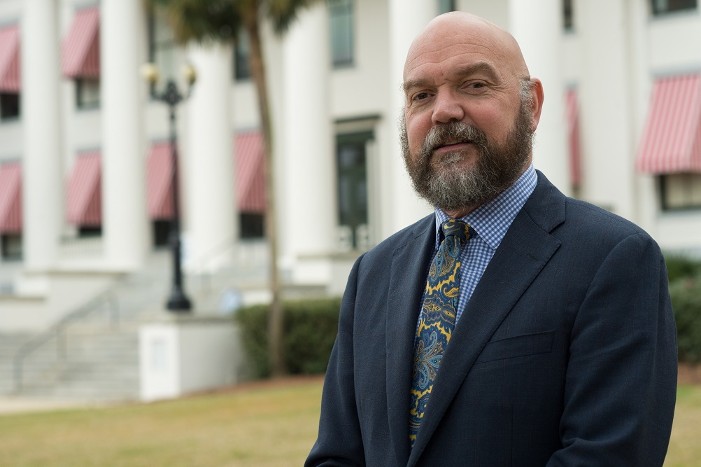
Florida Justice Reform Institute President William Large says auto glass litigation has led to inflated claims. | Florida Justice Reform Institute
By Michael Carroll
Nov 28, 2022

Insurance and tort reform groups have launched a campaign to warn consumers about the explosive growth in auto glass litigation in Florida  – a phenomenon that some observers say contributes to rising claims costs and insurance policy rates.

The campaign, called “Fix the Cracks,” was launched by the National Insurance Crime Bureau (NICB), Florida Justice Reform Institute and Personal Insurance Federation of Florida (PIFF).

The initiative aims to warn drivers of increasingly aggressive attempts by vendors to get drivers to sign over their car insurance benefits in return for windshield repairs and other incentives, such as gift cards. Vendors working with attorneys can then file inflated claims with the car insurer and take advantage of the state’s one-way attorney fee laws – a process that drives up the cost of insurance, those involved in “Fix the Cracks” say.

The campaign’s goal is to protect consumers from predatory auto glass claims, ensure vehicle passenger safety and advocate for legislative changes.

“It is a crime to file a fraudulent insurance claim in Florida, such as auto glass repairs or windshield replacements where no damage existed,” Eric De Campos, the NICB’s government affairs director, said in a prepared statement. “This is occurring often in Florida as consumers are being solicited and offered incentives to file false or fraudulently inflated auto glass insurance claims.”

Campaign supporters say the practice of assignment of benefits (AOB), whereby policyholders sign over their insurance rights to a vendor, is to blame for much of the current crisis.

“The Florida Legislature passed AOB property insurance reform in 2019, but auto glass claims abuse was left out,” Michael Carlson, president and CEO of PIFF, said in a statement emailed to the Florida Record. “The AOB auto glass loophole, supported by the one-way attorney fee law, is the latest machine for some to profit at the expense of auto insurance consumers.”

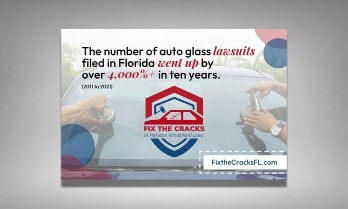
During the decade ending in 2021, the number of auto glass lawsuits in Florida jumped by more than 4,000%, from 591 in 2011 to 28,156 in 2021, according to a database maintained by the state Department of Financial Services.

An NICB analysis found that Florida and Arizona had the highest number of questionable auto glass claims among the 50 states in 2020, accounting for nearly three-quarters of the total number of questionable auto glass claims in the nation. Florida topped the ranking with 497,251 claims, with Arizona following with 394,163 such claims.

Research carried out by the Florida Justice Reform Institute indicates that only a handful of law firms are behind the auto-glass AOB litigation in Florida, with filings occurring in a small number of counties where these law firms operate.

“Vendors use these assignments to seize the policyholder’s special one-way attorney fee right under statute and file expensive lawsuits based on inflated claims,” William Large, the institute’s president, said in a statement. “Many of these lawsuits happen without the policyholder’s knowledge or informed consent.”

https://flarecord.com/stories/635471190-fix-the-cracks-campaign-warns-floridians-about-abusive-auto-glass-lawsuits 

https://www.fljustice.org/wp-content/uploads/2024/11/fjri-news.jpg 800 800 RAD Tech https://www.fljustice.org/wp-content/uploads/2024/11/Florida-Justice-Reform-Institute.jpg RAD Tech2022-11-29 15:53:412024-12-06 17:09:16‘Fix the Cracks’ campaign warns Floridians about abusive auto glass lawsuits
Florida Justice Reform Institute

Staged accident schemes and fraud among reason for FL having the most expensive auto insurance rates in the US

November 23, 2022/in Islander Media Group


Islander Media Group

Staged accident schemes and fraud among reason for FL having the most expensive auto insurance rates in the US

By Mitch Perry / Florida Phoenix / Special to Islander News Nov 23, 2022

car accidents

Florida lawmakers are scheduled to return to Tallahassee soon for another special session to deal with the state’s property insurance crisis. But it’s not just homes and condos where Floridians pay high insurance costs, but automobiles as well.

In fact, Florida’s auto insurance rates are among the top in the nation

An analysis from insure.com ranks Florida as the most expensive state in the nation for auto insurance, with the average premium at $2,560 a year, or $213 a month.

That’s a 23% increase in rates from 2021.

Ohio was listed as the lowest, with average insurance premiums of just $1,023 annually, insure.com reported. The average nationwide for full coverage car insurance is $1,682 in 2022.

Another study, Bankrate’s True Cost of Auto Insurance Report in 2022, showed that the average annual full coverage car insurance premium for a Floridian is $2,762, the second highest rate in the country and trailing only Louisiana, at $2,864. Florida’s average is nearly $1,000 above the average annual premium in the United States of $1,771.

Why are the numbers so high? There are myriad reasons, some indigenous to Florida and some attributable to national trends that have affected the industry overall coming out of the pandemic.

A majority of state lawmakers believed that they had addressed the issue to some extent in 2021, when they passed a bill (SB 54) that would have repealed the state’s “no fault” insurance law that requires that motorists carry $10,000 in personal-injury protection (PIP) coverage to help pay their medical costs after accidents.

It would have replaced PIP with mandatory bodily injury (BI) coverage of at least $25,000 per person and $50,000 per occurrence and required insurers to offer medical payments coverage (though policy holders could opt out of that coverage).

Gov. DeSantis vetoed the bill however, saying that the measure did “not adequately address the current issues facing Florida drivers” and could have unintended consequences that would be bad for consumers and the car insurance market.

It would have raised car insurance rates, according to a report commissioned by the Office of Insurance Regulation that was published right before that veto. The study from Pinnacle Actuarial Resources determined that if “no fault” was repealed, motorists would have seen their insurance premiums increase by 13%, or approximately $202 per vehicle annually. And the liability premium would go up nearly 20% for motorists who purchased medical payment coverage with a $10,000 limit.

Insurance companies were happy that DeSantis vetoed the bill, though they do acknowledge that PIP reform is needed.

“PIP is riddled with fraud. It is a problem,” says Michael Carlson, President and CEO of the Personal Insurance Federation of Florida (PIFF). “We have state law enforcement constantly working to root it out, to prosecute those folks who commit it.”

That fraud plays itself by in several ways, Carlson says, such as a “whole cottage industry of phony medical providers” that send fraudulent medical bills to auto insurance companies. “They’ll charge soft-tissue treatments of various kinds…they’ll charge it until they hit $10,000 and then suddenly that patient is fine, and they won’t charge anymore.”

There are also incidents with motorists staging accidents, and Tampa and Miami are known as being among the top cities in the country where such fraud is prevalent.

In July, CFO Jimmy Patronis announced the arrest of Angela Ippolito Duncan, owner of the Ybor Medical Center, for allegedly planning and participating in staged car accidents to submit more than $970,000 in fake accident automobile insurance claims. According to a press release from the CFO’s office, the investigation revealed that Duncan recruited an undercover detective to participate in an intentional motor vehicle traffic crash, provided the passengers for the vehicles, and directed all the participants for treatment at the Ybor Medical Center.

“Scam artists are working every day to drive up your insurance rates to line their own pockets,” Patronis said after the arrest was made

Another factor in driving up rates that hasn’t been addressed by state lawmakers is glass replacement fraud, which observers say has gone unchecked for years. This is where contractors literally will go after motorists in parking lots, gas stations or knock on their front doors to inform that they can have their windshields replaced for no cost if they have comprehensive insurance coverage, which about 90% of Florida drivers have, according to Mark Friedlander with the Insurance Information Institute.

What motorists don’t realize, however, is that once they sign the paperwork with those contractors to get their windshield replaced, they have “assigned” a law firm to handle the issue with their insurance company. That assignment of benefits (AOB) with auto glass has led to an explosion of lawsuits filed in Florida over the past decade by more than 4,000%, according to a consortium of organizations calling themselves “Fix the Cracks” who want the state to address the issue.

“This is an area of law where these cases were virtually nonexistent 10 years ago, and now they’ve perforated into the thousands, and the only explanation is that there was either a massive meteorite shower that went over the state of Florida, or the incentive for attorney’s fees are driving this and the loophole that was allowed to be created for auto glass claims is still in existence,” says William Large, the president of the Florida Justice Reform Institute.

The Bankrate report also states that Florida drivers spend the second highest proportion of their money on car insurance at 4.42% of their income, trailing only Louisiana (5.26%). And of all the metro areas in the nation analyzed, Miami and Tampa drivers spend the highest percentage of their annual income on their car insurance coverage, at 5.58% and 4.49%, respectively. The average American motorist spends 2.57% of their annual income on auto insurance.

Another factor in Florida’s auto insurance rates being among the highest in the nation are our frequent storms and flooding, and the fact that we have a lot of auto accidents. And keep in mind that Florida has a very high percentage of seniors 65 and older, according to U.S. Census data.

There were 3,737 fatalities from car crashes last year, making Florida the third most dangerous state to drive in the country, according to the National Highway Traffic Safety Administration. There were more than 400,000 automobile crashes in Florida in 2021, resulting in more than 252,000 injuries from those crashes.

Also, one out of every 5 drivers (20.4 percent) in the state is uninsured, the sixth highest rate in the nation.

While the issues in Florida contribute to our higher-than-average premiums, national and global issues play a part as well, such as inflation and the breakdown in the supply chain that has raised rates everywhere.

“You had inflation affecting new vehicles, the cost of used vehicles, the availability of spare parts and the cost of labor. So all of that means when an insurance company has to make you right after a crash, they have a bigger payout. And if they have a bigger payout, now they have to recover that somewhere,” says Michael Giusti, a senior reporter and analyst for insurancequotes.com

Whether the Legislature is poised to take up any of these issues next year isn’t certain, but observers note that after the governor vetoed the PIP bill in 2021, the appetite for auto insurance reform in Tallahassee has chilled considerably.

So will the Legislature attempt auto insurance reform in 2023?

“I don’t think so,” Large says. “I think that the advocates who are moving for a bill to go from PIP to BI probably got a very clear message from Gov. DeSantis vis a vis his veto, and I don’t think they’re going to try to bring up a bill up in 2023.”

But the future isn’t all bad news for Floridians hoping to save on their auto insurance bills. Unlike property insurers, who are dissolving and abandoning Florida at an alarming rate, the auto insurance industry remains robust in Florida, with more than 50 companies writing policies for motorists.

“If you look at all the insurance products around the country, auto insurance is the most competitive,” says Friedlander. “Rates vary significantly between companies. And we always recommend (that you) shop your coverage if your rates are going up, because you can get multiple quotes and different discount programs that will help you.”

Here’s a list of car insurance rates by states and Washington, D.C. in 2022, from an analysis by insure.com:

State 2022 Full Coverage
(year)
Difference from  from National Average  ($1,682 in 2022) in %
Florida $2,560 52%
Louisiana $2,546 51%
Delaware $2,137 27%
Michigan $2,133 27%
California $2,115 26%
Kentucky $2,105 25%
Missouri $2,104 25%
Nevada $2,023 20%
New York $2,020 20%
Nebraska $2,018 20%
Colorado $1,940 15%
New Jersey $1,901 13%
South Carolina $1,894 13%
Texas $1,875 11%
Washington, D.C. $1,858 10%
Rhode Island $1,845 10%
Oklahoma $1,797 7%
Connecticut $1,750 4%
Wyoming $1,736 3%
Montana $1,692 1%
Georgia $1,647 -2%
Maryland $1,640 -2%
Arizona $1,617 -4%
West Virginia $1,610 -4%
Mississippi $1,606 -5%
Arkansas $1,597 -5%
Kansas $1,594 -5%
South Dakota $1,581 -6%
Illinois $1,578 -6%
Alabama $1,542 -8%
Massachusetts $1,538 -9%
New Mexico $1,505 -11%
Wisconsin $1,499 -11%
Minnesota $1,493 -11%
Utah $1,469 -13%
Pennsylvania $1,445 -14%
North Dakota $1,419 -16%
Tennessee $1,373 -18%
Washington $1,371 -18%
North Carolina $1,368 -19%
Alaska $1,359 -19%
Iowa $1,321 -21%
Virginia $1,321 -21%
New Hampshire $1,307 -22%
Hawaii $1,306 -22%
Indiana $1,256 -25%
Oregon $1,244 -26%
Vermont $1,158 -31%
Idaho $1,121 -33%
Maine $1,116 -34%
Ohio $1,023 -39%

This report first appeared on the website of the Florida Phoenix, a nonprofit news organization dedicated to coverage of state government and politics from Tallahassee.

https://www.islandernews.com/local/business/staged-accident-schemes-and-fraud-among-reason-for-fl-having-the-most-expensive-auto-insurance/article_23485e3e-6b48-11ed-b3eb-e76ef9dc46cc.html 

https://www.fljustice.org/wp-content/uploads/2024/11/fjri-news.jpg 800 800 RAD Tech https://www.fljustice.org/wp-content/uploads/2024/11/Florida-Justice-Reform-Institute.jpg RAD Tech2022-11-23 15:53:432024-11-24 22:08:35Staged accident schemes and fraud among reason for FL having the most expensive auto insurance rates in the US
Florida Justice Reform Institute

Add auto insurance to the increasing costs of living in Florida

November 23, 2022/in Florida Phoenix

Florida Phoenix

Staged accident schemes, litigation among the reasons why premiums are so high in the Sunshine State

BY: MITCH PERRY – NOVEMBER 23, 2022 7:00 AM
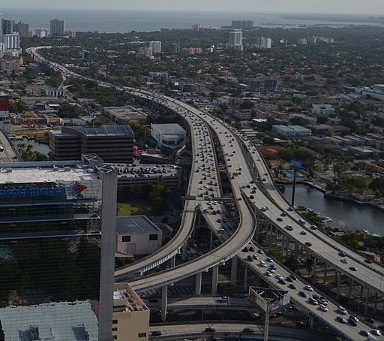
Miami traffic I-95 traffic in Miami. Source: Wikimedia Commons

Florida lawmakers are scheduled to return to Tallahassee soon for another special session to deal with the state’s property insurance crisis. But it’s not just homes and condos where Floridians pay high insurance costs, but automobiles as well.

In fact, Florida’s auto insurance rates are among the top in the nation

An analysis from insure.com ranks Florida as the most expensive state in the nation for auto insurance, with the average premium at $2,560 a year, or $213 a month. That’s a 23% increase in rates from 2021.

Ohio was listed as the lowest, with average insurance premiums of just $1,023 annually, insure.com reported. The average nationwide for full coverage car insurance is $1,682 in 2022.

Another study, Bankrate’s True Cost of Auto Insurance Report in 2022, showed that the average annual full coverage car insurance premium for a Floridian is $2,762, the second highest rate in the country and trailing only Louisiana, at $2,864. Florida’s average is nearly $1,000 above the average annual premium in the United States of $1,771.

Why are the numbers so high? There are myriad reasons, some indigenous to Florida and some attributable to national trends that have affected the industry overall coming out of the pandemic.

A majority of state lawmakers believed that they had addressed the issue to some extent in 2021, when they passed a bill (SB 54) co-sponsored by Tampa Bay area state Sens. Danny Burgess (R- Zephyrhills) and Darryl Rouson (D-St. Petersburg) that would have repealed the state’s “no fault” insurance law that requires that motorists carry $10,000 in personal-injury protection (PIP) coverage to help pay their medical costs after accidents.

It would have replaced PIP with mandatory bodily injury (BI) coverage of at least $25,000 per person and $50,000 per occurrence and required insurers to offer medical payments coverage (though policy holders could opt out of that coverage).

Gov. DeSantis vetoed the bill however, saying that the measure did “not adequately address the current issues facing Florida drivers” and could have unintended consequences that would be bad for consumers and the car insurance market.

It definitely would have raised car insurance rates, according to a report commissioned by the Office of Insurance Regulation that was published right before that veto. The study from Pinnacle Actuarial Resources determined that if “no fault” was repealed, motorists would have seen their insurance premiums increase by 13%, or approximately $202 per vehicle annually. And the liability premium would go up nearly 20% for motorists who purchased medical payment coverage with a $10,000 limit.

But there are those who think motorists would have been better off if the legislation had passed.

“When I see people move to Florida who come from other states that have mandatory bodily injury liability, their premiums always seem to be lower,” says Brandon-based insurance agent Kevin Swanson, who says he hasn’t read enough studies to have a firm opinion on the issue.

Insurance companies were happy that DeSantis vetoed the bill, though they do acknowledge that PIP reform is needed.

“PIP is riddled with fraud. It is a problem,” says Michael Carlson, President and CEO of the Personal Insurance Federation of Florida (PIFF). “We have state law enforcement constantly working to root it out, to prosecute those folks who commit it.”

That fraud plays itself by in several ways, Carlson says, such as a “whole cottage industry of phony medical providers” that send fraudulent medical bills to auto insurance companies.  “They’ll charge soft-tissue treatments of various kinds…they’ll charge it until they hit $10,000 and then suddenly that patient is fine, and they won’t charge anymore.” 

There are also incidents with motorists staging accidents, and Tampa and Miami are known as being among the top cities in the country where such fraud is prevalent.

In July, CFO Jimmy Patronis announced the arrest of Angela Ippolito Duncan, owner of the Ybor Medical Center, for allegedly planning and participating in staged car accidents to submit more than $970,000 in fake accident automobile insurance claims. According to a press release from the CFO’s office, the investigation revealed that Duncan recruited an undercover detective to participate in an intentional motor vehicle traffic crash, provided the passengers for the vehicles, and directed all the participants for treatment at the Ybor Medical Center.

“Scam artists are working every day to drive up your insurance rates to line their own pockets,” Patronis said after the arrest was made.

Another factor in driving up rates that hasn’t been addressed by state lawmakers is glass replacement fraud, which observers say has gone unchecked for years. This is where contractors literally will go after motorists in parking lots, gas stations or knock on their front doors to inform that they can have their windshields replaced for no cost if they have comprehensive insurance coverage, which about 90% of Florida drivers have, according to Mark Friedlander with the Insurance Information Institute.

What motorists don’t realize, however, is that once they sign the paperwork with those contractors to get their windshield replaced, they have “assigned” a law firm to handle the issue with their insurance company. That assignment of benefits (AOB) with auto glass has led to an explosion of lawsuits filed in Florida over the past decade by more than 4,000%, according to a consortium of organizations calling themselves “Fix the Cracks” who want the state to address the issue.

“This is an area of law where these cases were virtually nonexistent 10 years ago, and now they’ve perforated into the thousands, and the only explanation is that there was either a massive meteorite shower that went over the state of Florida, or the incentive for attorney’s fees are driving this and the loophole that was allowed to be created for auto glass claims is still in existence,” says William Large, the president of the Florida Justice Reform Institute.

The Bankrate report also states that Florida drivers spend the second highest proportion of their money on car insurance at 4.42% of their income, trailing only Louisiana (5.26%). And of all the metro areas in the nation analyzed, Miami and Tampa drivers spend the highest percentage of their annual income on their car insurance coverage, at 5.58% and 4.49%, respectively. The average American motorist spends 2.57% of their annual income on auto insurance.

Another factor in Florida’s auto insurance rates being among the highest in the nation are our frequent storms and flooding, and the fact that we have a lot of auto accidents. And keep in mind that Florida has a very high percentage of seniors 65 and older, according to U.S. Census data.

There were 3,737 fatalities from car crashes last year, making Florida the third most dangerous state to drive in the country, according to the National Highway Traffic Safety Administration.  There were more than 400,000 automobile crashes in Florida in 2021, resulting in more than 252,000 injuries from those crashes.

Also, one out of every 5 drivers (20.4 percent) in the state is uninsured, the sixth highest rate in the nation.

While the issues in Florida contribute to our higher-than-average premiums, national and global issues play a part as well, such as inflation and the breakdown in the supply chain that has raised rates everywhere.

“You had inflation affecting new vehicles, the cost of used vehicles, the availability of spare parts and the cost of labor. So all of that means when an insurance company has to make you right after a crash, they have a bigger payout. And if they have a bigger payout, now they have to recover that somewhere,” says Michael Giusti, a senior reporter and analyst for insurancequotes.com

Whether the Legislature is poised to take up any of these issues next year isn’t certain, but observers note that after the governor vetoed the PIP bill in 2021, the appetite for auto insurance reform in Tallahassee has chilled considerably.

So will the Legislature attempt auto insurance reform in 2023?

“I don’t think so,” Large says. “I think that the advocates who are moving for a bill to go from PIP to BI probably got a very clear message from Gov. DeSantis vis a vis his veto, and I don’t think they’re going to try to bring up a bill up in 2023.”

But the future isn’t all bad news for Floridians hoping to save on their auto insurance bills. Unlike property insurers, who are dissolving and abandoning Florida at an alarming rate, the auto insurance industry remains robust in Florida, with more than 50 companies writing policies for motorists.

“If you look at all the insurance products around the country, auto insurance is the most competitive,” says Friedlander. “Rates vary significantly between companies. And we always recommend (that you) shop your coverage if your rates are going up, because you can get multiple quotes and different discount programs that will help you.”

Here’s a list of car insurance rates by states and Washington, D.C. in 2022, from an analysis by insure.com:

State 2022 Full Coverage
(year)
Difference from  from National Average  ($1,682 in 2022) in %
Florida $2,560  52%
Louisiana  $2,546 51%
Delaware $2,137 27%
Michigan $2,133 27%
California $2,115 26%
Kentucky $2,105 25%
Missouri $2,104 25%
Nevada $2,023 20%
New York $2,020 20%
Nebraska $2,018 20%
Colorado $1,940 15%
New Jersey $1,901 13%
South Carolina $1,894 13%
Texas $1,875 11%
Washington, D.C. $1,858 10%
Rhode Island $1,845 10%
Oklahoma $1,797 7%
Connecticut $1,750 4%
Wyoming $1,736 3%
Montana $1,692 1%
Georgia $1,647 -2%
Maryland $1,640 -2%
Arizona $1,617 -4%
West Virginia $1,610 -4%
Mississippi $1,606 -5%
Arkansas $1,597 -5%
Kansas $1,594 -5%
South Dakota $1,581 -6%
Illinois $1,578 -6%
Alabama $1,542 -8%
Massachusetts $1,538 -9%
New Mexico $1,505 -11%
Wisconsin $1,499 -11%
Minnesota $1,493 -11%
Utah $1,469 -13%
Pennsylvania $1,445 -14%
North Dakota $1,419 -16%
Tennessee $1,373 -18%
Washington $1,371 -18%
North Carolina $1,368 -19%
Alaska $1,359 -19%
Iowa $1,321 -21%
Virginia $1,321 -21%
New Hampshire $1,307 -22%
Hawaii $1,306 -22%
Indiana $1,256 -25%
Oregon $1,244 -26%
Vermont $1,158 -31%
Idaho $1,121 -33%
Maine $1,116 -34%
Ohio $1,023 -39%

https://floridaphoenix.com/2022/11/23/add-auto-insurance-to-the-increasing-costs-of-living-in-florida/ 
https://www.fljustice.org/wp-content/uploads/2024/11/fjri-news.jpg 800 800 RAD Tech https://www.fljustice.org/wp-content/uploads/2024/11/Florida-Justice-Reform-Institute.jpg RAD Tech2022-11-23 15:53:432024-12-06 13:09:02Add auto insurance to the increasing costs of living in Florida
Florida Justice Reform Institute

New Effort Launches to ‘Fix the Cracks’ in Florida’s Windshield Laws

November 15, 2022/in Florida Daily

Florida Daily

By Florida Daily -November 15, 2022, 2:00 pm

Fix the cracks

While some progress has been made in Florida to address the state’s deepening property insurance market crisis, data shows there is also a crisis in the auto market. The number of auto glass lawsuits filed in Florida went up by more than 4,000 percent in ten years (2011 to 2021). According to the Florida Department of Financial Services’ Service of Process database, In 2011, there were 591 glass/windshield claim lawsuits filed in the state. The number grew to 28,156 lawsuits in 2021.

An initiative called “Fix the Cracks” is working to protect consumers from predatory auto glass claims and litigation, ensure passenger safety and draw attention to the need for legislative changes. Many Floridians are unknowingly signing their rights away to vendors who are in cahoots with trial attorneys. Fix the Cracks partners hope Florida lawmakers will continue to chip away at the litigation-for-profit machine that encourages auto glass lawsuits — primarily benefiting these trial lawyers — increasing claims costs and the overall cost of insurance.

The growing list of Fix the Cracks partners includes the National Insurance Crime Bureau (NICB), Florida Justice Reform Institute (FJRI) and Personal Insurance Federation of Florida (PIFF).

“It is a crime to file a fraudulent insurance claim in Florida, such as auto glass repairs or windshield replacements where no damage existed,” said Eric De Campos, a government affairs director for the National Insurance Crime Bureau. “This is occurring often in Florida as consumers are being solicited and offered incentives to file false or fraudulently inflated auto glass insurance claims. NICB supports the Fix the Cracks initiative in warning the public of these scams that take advantage of Florida consumers.”

According to an NICB analysis summary, Florida and Arizona were the top two states for auto glass questionable claims in 2020. These two states accounted for 74 percent of all auto glass questionable claims in the United States. The top five states for auto glass claims in 2020 were Florida (with a whopping 497,251), Arizona (394,163), California (333,199), New York (259,357) and Texas (252,553).

According to research conducted by FJRI, assignment of benefits (AOB) auto glass lawsuits are concentrated in a handful of law firms. For the first six months of 2020, 12 law firms were each responsible for at least 200 auto glass AOB cases in Florida court. Overwhelmingly, these auto glass cases are filed in just a few counties, which typically align with the market area of the assignee’s attorney’s firm. A manual examination of various complaints filed in these counties, however, reveals that affected consumers come from all over the state.

“Vendors use these assignments to seize the policyholder’s special one-way attorney fee right under statute and file expensive lawsuits based on inflated claims,” said William Large, the president of the Florida Justice Reform Institute. “Many of these lawsuits happen without the policyholder’s knowledge or informed consent.”

Fix the Cracks partners say they will continue to add and share resources to bring attention to the problem and the need for reforms.

“The Florida Legislature passed AOB property insurance reform in 2019, but auto glass claims abuse was left out,” said Michael Carlson, the president and CEO of PIFF. “The AOB auto glass loophole, supported by the one-way attorney fee law, is the latest machine for some to profit at the expense of auto insurance consumers.”

https://www.floridadaily.com/new-effort-launches-to-fix-the-cracks-in-floridas-windshield-laws/ 

https://www.fljustice.org/wp-content/uploads/2024/11/fjri-news.jpg 800 800 RAD Tech https://www.fljustice.org/wp-content/uploads/2024/11/Florida-Justice-Reform-Institute.jpg RAD Tech2022-11-15 15:53:402024-12-06 12:28:33New Effort Launches to ‘Fix the Cracks’ in Florida’s Windshield Laws
Florida Justice Reform Institute

Initiative launches to ‘fix the cracks’ in auto glass claims

November 14, 2022/in Florida Politics


Florida Politics

Fix the cracks

Drew Wilson – November 14, 2022

The initiative says questionable claims are driving up auto insurance premiums.

A new initiative launched by insurance and tort reform groups is taking aim at assignment of benefits agreements for windshield repairs.

Assignment of benefits, or AOB, is a legal process that allows policyholders to sign over their insurance benefits to a third party in exchange for a quick repair.

Companies on the other end of AOB agreements often sue insurance companies to collect fees. Insurers say those lawsuits are often for inflated claims. Insurers say that AOBs, coupled with the one-way attorney fees statute requiring insurance companies to pay the cost of litigation if they lose, are driving up auto insurance premiums.

The new initiative, “Fix the Cracks,” is a partnership between the National Insurance Crime Bureau (NICB), the Florida Justice Reform Institute (FJRI), and the Personal Insurance Federation of Florida (PIFF).

According to a news release, the initiative “is working to protect consumers from predatory auto glass claims and litigation, ensure passenger safety and draw attention to the need for legislative changes.”

Fix the Cracks said most policyholders aren’t aware they are signing over their rights as policyholders or that repair companies and trial lawyers are using rights gained under an AOB agreement to sue insurance companies.

The group said many policyholders who sign AOB agreements are lured with promises of incentives. In past Legislative Sessions, lawmakers have tried to curb auto glass claims by limiting incentives, such as cash or gift cards.

The provision was included in a 2021 bill that would have ended the state’s no-fault auto insurance system. Though that bill cleared the Legislature it was ultimately vetoed by Gov. Ron DeSantis

State data shows auto glass claim lawsuits are on the rise, with 28,156 such lawsuits filed last year. By comparison, there were 591 auto glass claim lawsuits filed in 2011. Overall, there were nearly a half million auto glass claims filed in Florida last year, more than in any other state. There were fewer than 400,000 claims filed in Arizona, the No. 2 state.

Additionally, Fix the Cracks said Florida and Arizona account for nearly three-quarters of “questionable” auto glass claims nationwide.

“It is a crime to file a fraudulent insurance claim in Florida, such as auto glass repairs or windshield replacements where no damage existed,” said Eric De Campos, Government Affairs Director for the National Insurance Crime Bureau. “This is occurring often in Florida as consumers are being solicited and offered incentives to file false or fraudulently inflated auto glass insurance claims. NICB supports the Fix the Cracks initiative in warning the public of these scams that take advantage of Florida consumers.”

Data compiled by FJRI shows most auto glass claims are filed by about a dozen law firms operating in just a handful of Florida counties. However, their customers hail from all corners of the state.

“Vendors use these assignments to seize the policyholder’s special one-way attorney fee right under statute and file expensive lawsuits based on inflated claims,” said William Large, president of the Florida Justice Reform Institute. “Many of these lawsuits happen without the policyholder’s knowledge or informed consent.”

Fix the Cracks partners say they will continue to add and share resources to bring attention to the problem and advocate for reforms.

“The Florida Legislature passed AOB property insurance reform in 2019, but auto glass claims abuse was left out,” said Michael Carlson, president and CEO of PIFF. “The AOB auto glass loophole, supported by the one-way attorney fee law, is the latest machine for some to profit at the expense of auto insurance consumers.”

https://floridapolitics.com/archives/571441-initiative-launches-to-fix-the-cracks-in-auto-glass-claims/ 

https://www.fljustice.org/wp-content/uploads/2024/11/fjri-news.jpg 800 800 RAD Tech https://www.fljustice.org/wp-content/uploads/2024/11/Florida-Justice-Reform-Institute.jpg RAD Tech2022-11-14 15:53:422024-11-24 22:12:08Initiative launches to ‘fix the cracks’ in auto glass claims

FJRI News Categories

FJRI News Archive

Search Search
Florida Justice Reform Institute

Florida Justice Reform Institute

  • Phone

    (850) 222-0170

  • Hours of Operation

    Monday – Friday, 9 a.m.-5 p.m.

  • Location Location
    Address

    215 South Monroe Street
    Suite 140
    Tallahassee, FL 32301

Site Links

  • The Committee for Florida Justice Reform
  • About
  • Legislative
  • Appellate Work
  • FJRI in the News
  • Get Involved
© 2026 Florida Justice Reform Institute, All Rights Reserved. | Website Hosting & Web Development by RAD TECH
  • Link to Facebook
  • Link to X
  • Link to LinkedIn
Scroll to top Scroll to top Scroll to top