
House panel advances bill easing 2023 landlord liability shield

Jan 30, 2026 – By Jim Ash
A House panel voted Thursday to ease a 2023 “tort reform” that critics say goes too far to shield landlords from liability in exchange for beefed up security.
The Civil Justice & Claims Subcommittee voted 14-3 to approve HB 1423 by Rep. Michelle Salzman, a Republican and Escambia County business owner.
 Rep. Michelle Salzman
A House panel voted Thursday to ease a 2023 “tort reform” that critics say goes too far to shield landlords from liability in exchange for beefed up security.
The Civil Justice & Claims Subcommittee voted 14-3 to approve HB 1423 by Rep. Michelle Salzman, a Republican and Escambia County business owner.
“HB 1423 makes it easier for the victim of a violent crime to recover damages in a negligent security lawsuit,” Salzman told the panel.
The bill would strip multi-family residential property owners of a presumption against liability if two or more certain crimes are reported at their property within 24 months of the “subject incident.”
The bill lists murder, robbery, sexual battery, aggravated assault, battery, kidnapping or false imprisonment, or “a crime involving a firearm.”
The Florida Chamber of Commerce, Associated Industries of Florida, and the Florida Justice Reform Institute, all champions of the 2023 civil litigation restrictions, were opposed.
Dan Santaniello, a board-certified civil trial lawyer and past president of the Florida Defense Lawyers Association, appeared on behalf of the Florida Justice Reform Institute.
Santaniello said the bill is unfair to landlords who invested heavily in design consultants, video surveillance systems, enhanced locks and pool gates, and employee training programs, to earn the immunity.
“Apartment owners needed objective criteria, we finally did it, this will take it away” he said. “The practical effect will be to negate what we did in 2023.”
Landlords could risk losing their liability protections when tenants commit crimes against each other, “behind closed doors,” he said.
“What if it is a kidnapping, an estranged parent takes a kid? We can do nothing about that.”
AIF Vice President Adam Basford warned landlords would pass along the costs of higher insurance premiums by raising rents.
The bill will exacerbate Florida’s affordable housing shortage by discouraging investment in new development, he warned.
“It moves away from a compliance-based standard that we think makes a whole lot of sense,” he said. “It does create an easy pathway for lawsuits to move forward.”
Laura Youmans, a lobbyist for the Florida Justice Association, argued that the bill would merely restore “balance and clarity” in negligent security cases.
The liability shield makes crime victims “bear the brunt of the consequences” for security failures that are beyond their control, she said.
Current law forces jurors to disregard “real world” evidence of a landlord’s culpability merely because he or she met a “checklist” of security requirements, Youmans said.
“That forces jurors to discount evidence they’ve already heard and that they’ve deemed credible,” Youmans said. “That is not how the jury’s fact finding is supposed to work.”
The bill will not eliminate security incentives or liability protections for the majority of landlords who maintain crime-free properties, Youmans stressed.
“It puts the presumption back in its proper lane, it preserves incentives for safety, while ensuring that real world evidence of danger is not ignored.”
HB 1423 faces one more committee stop, Judiciary, before reaching the House floor.
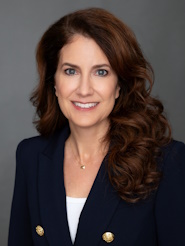 Sen. Jennifer Bradley
Sen. Jennifer Bradley, a Flemming Island attorney and fellow Republican, is sponsoring a companion that has yet to move.
SB 956 faces hearings in the Senate Judiciary Committee, Community Affairs Committee, and Senate Rules. With the regular 60-day session scheduled to adjourn March 13, there is still plenty of time.
However, the bill’s chances of success remain uncertain.
Shortly after lawmakers convened January 13, Gov. Ron DeSantis vowed in a social media post to defeat any attempts to weaken the 2023 civil litigation restrictions.
