
Florida Justice Reform Institute
  • Home
  • About
    • Mission
    • Meet the President
  • Legislative
    • On The Front Line
    • Achievements
    • 2026 Legislation
  • Appellate Work
  • FJRI in the News
  • Get Involved
    • Become a Member
    • The Committee for Florida Justice Reform
    • Contact
  • Click to open the search input field Click to open the search input field Search
  • Menu Menu
Florida Justice Reform Institute

Report: Third-party litigation funding affects affordability

January 21, 2026/in Legal News Online

Chris Dickerson – Jan 21, 2026

WASHINGTON – A new report shows how third-party litigation financing is driving up costs for American consumers and families more than $600 per household annually when affordability remains a top concern across the country.

The report, released January 20 by Citizens Against Lawsuit Abuse, shows higher prices, lost income, and lost tax revenue tied to exploitative lawsuit investment practices. The study, prepared by The Perryman Group, examines how outside foreign and sovereign entities that are financing lawsuits in exchange for a share of the payout are distorting the civil justice system and passing exorbitant costs onto households through inflated prices and reduced economic growth.

CALA’s executive director says third-party litigation financing, or TPLF, turns courtrooms into profit machines for deep-pocketed investors while working families pay the price at the checkout counter and in their monthly bills.

 Gomez – File photo

“Third-party litigation financing has quietly become a significant burden on American families,” said Victor Gomez, Executive Director of Citizens Against Lawsuit Abuse. “When Wall Street-style investors bankroll lawsuits for profit, the costs are not constrained to the courtroom.

“Americans are facing these consequences through increased prices, higher premiums, job losses, and reduced purchasing power for everyday consumers.”

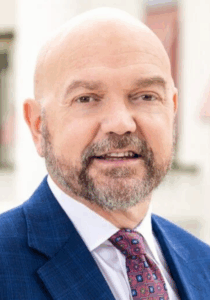
 Large – File photo

The president of the Florida Justice Reform Institute says TPLF has other consequences as well.

“Third-party litigation funding increases the probability that meritless claims will be brought, inserts questions about who is actually controlling the litigation, results in inevitable conflicts of interest among the lawyer, client and litigation funder and makes settling lawsuits far more difficult and expensive,” William Large told Legal Newsline. “For far too long, institutional investors have been allowed to invest in litigation with little oversight, to the detriment of the parties and the court system itself.

“Reform on this subject is needed now.”

CALA says this “highly unregulated and purposefully opaque practice turns America’s courtrooms into casinos that are open for business to investors at the expense of American citizens and businesses. Adding insult to injury, foreign investors can often avoid paying taxes on their profits.”

According to the report, the economic impact of third-party litigation financing is:

· More than $607 per household per year in lost earnings and reduced purchasing power due to higher inflation and slower economic growth

$192.79 per person annually in direct consumer costs tied to TPLF-driven litigation inefficiencies

More than $31 billion in added inflationary pressure across the economy, driven in part by higher insurance and liability-related costs

More than $54 billion in lost economic output annually, weakening job growth and income gains that families rely on to keep up with rising costs

About 454,450 jobs are lost every year as businesses struggle to absorb the rising costs and uncertainty created by third-party litigation financing

About $15 billion in annual tax receipts are lost across federal, state and local governments due to excessive TPLF litigation.

“These findings confirm what we are already feeling at the checkout counter and when paying our monthly bills,” Gomez said. “TPLF fuels the wave of frivolous litigation that raises costs across the economy, leaving families with less money in their pockets and fewer opportunities to get ahead while these wealthy outside investors earn millions in tax-free profits.”

CALA’s report is part of its ongoing efforts to highlight how lawsuit abuse and predatory litigation undermine affordability, economic stability, and fairness for consumers nationwide. While it says a fair civil justice system is essential, CALA says practices that inject profit-driven incentives into litigation can create ripple effects that hurt households and economic viability long after a case is filed.

The result, according to CALA, is a hidden affordability burden that consumers feel in their monthly bills, wages and everyday expenses.

https://www.legalnewsline.com/legislation-and-government/report-third-party-litigation-funding-affects-affordability/article_2a5e4a4e-7d15-49a5-b045-a87ea4adcaa0.html

https://www.fljustice.org/wp-content/uploads/2024/11/fjri-news.jpg 800 800 Becky Lannon https://www.fljustice.org/wp-content/uploads/2024/11/Florida-Justice-Reform-Institute.jpg Becky Lannon2026-01-21 19:03:322026-01-21 19:04:23Report: Third-party litigation funding affects affordability
Florida Justice Reform Institute

Florida Bar Committee, Plaintiffs Lawyers Push for Rejection of New Standard on Expert Witness Testimony

October 8, 2015/in Legal News Online


Legal Newsline

Jessica KarmasekOct. 8, 2015, 5:22pm

ALLAHASSEE, Fla. (Legal Newsline) – The Florida Bar’s Board of Governors, seemingly at the behest of plaintiffs’ attorneys, may end up pushing the state Supreme Court to review and reject a relatively new standard governing expert witness testimony.

In June 2013, Florida Gov. Rick Scott signed into law a bill amending the state’s evidence code, replacing the Frye standard with the Daubert standard.

Under the state’s version of the old 1923 Frye decision, a judge did not, with few exceptions, have to evaluate the reliability of an expert’s testimony.

Under Florida’s new standard — which took effect July 1, 2013 — an expert must be qualified, the testimony must fit the facts of the case and the methodology used must be testable and reproducible.

Federal courts and more than half of the nation have adopted the Daubert standard.

Over the past two years,  the Florida Bar’s Code and Rules of Evidence Committee, or CREC, has sought input from the public on whether it should reject the new standard.

Comments came in three waves — the CREC received the first set during summer and fall 2013 after an unadvertised, informal request was made; the second set was received in fall 2014 after a slightly more formal request via a posting on the committee’s working webpage; and the third came after an official, 30-day publication for comments on July 15.

The committee also considered two position papers, one in support of the standard and one against.

In addition, during the CREC’s two-year consideration of what to recommend, it took several votes.

In a Sept. 27, 2013 straw poll, 28 CREC members voted in favor of the standard, while six voted against. A second straw poll of its membership later that year — via email — resulted in 21 in favor of Daubert and six voting against it.

On Oct. 17, 2014 — following years of deliberation, consideration of dozens of public comments and analysis of the position papers — the committee held a final debate and vote. By a vote of 16-14, the CREC rejected the Daubert standard.

The Bar’s BOG now plans to review the committee’s recommendation. The issue has been placed on the BOG’s supplemental agenda for Oct. 16.

Many Florida plaintiffs’ attorneys — a number of whom make up the current CREC — argued in the CREC-sought public comments that the new standard presents a number of problems.

“The committee’s action is in the best interest of litigants on both sides as well as our court system, in voting against a rule that increases time and expenses to the parties, and is in violation of Article V of the Florida Constitution,” wrote A. Crosby Crane, an attorney at Morgan & Morgan PA in Tampa.

“The Frye standard, which has been in effect for decades in Florida, protects the interests of all parties fairly, and I thank the committee for its actions that will hopefully keep this time-tested standard in place for the citizens of Florida.”

More than 20 comments in support of the Frye standard came from attorneys at Morgan & Morgan, one of the largest consumer protection and personal injury firms in the region.

Andrew Needle, a partner at Needle & Ellenberg PA in Miami and a three-term former member of the Bar’s BOG, said in his comments that the Daubert standard does not provide “any substantive advantage to protect or safeguard the rights of litigants on either side.”

“It does, without question, impose time-consuming and expensive hurdles to litigants,” he wrote.

C. Todd Alley of Alley Clark & Greiwe in Tampa applauded the CREC’s recommendation and encouraged it to “continue its efforts to preserve Florida’s longstanding and time-proven adherence to Frye.”

“The new Daubert statute, a review of which leads one to believe that it at least in part violates Article 5 of the Florida Constitution, did not provide any substantive advantage to protect or safeguard the rights of litigants on either side,” he wrote in his comments.

“As we have seen in federal court and throughout the country it does however, without question, impose time-consuming and expensive hurdles to all litigants.”

Dennis Brannon of Fort Walton Beach law firm Brannon & Brannon — and who noted in his written comments that he is a member of the Florida Justice Association, a group of trial lawyers— argued that juries should be given the benefit of the doubt and allowed to “sift and measure” the evidence presented.

“As we take away from juries their ability to do that we do a disservice to the jury system and exhibit a lack of confidence in the electorate and those chosen to serve as jurors,” he wrote, in support of Frye. “Are we saying that we no longer trust our neighbors to have the intellectual capacity to reach a reasoned decision?”

Brannon contends that under Daubert, evidence now will be “screened unnecessarily” by trial and appellate courts, increasing the cost of litigation, causing additional uncertainty and divergent results on appeal.

Nancy La Vista, a partner at Clark Fountain La Vista Prather Keen & Littky-Rubin in West Palm Beach, wrote in her comments there was “no need” for a change to Daubert.

La Vista, a self-described critical care nurse attorney practicing in both state and federal courts, said the history and case law developed for Frye is “extensive” and “more than adequately” ensures scientific reliability.

“To adopt Daubert would only increase litigation by evidentiary challenges, whether legally based or not,” she wrote. “This extra expense burdens a litigation system that is already burdened and expensive but in my opinion accomplishes nothing in exchange.”

Crane, Needle, Alley, Brannon and La Vista could not be reached for additional comment.

Meanwhile, defense attorneys in the state countered that Daubert ensures the reliability of expert evidence and protects the rights of both plaintiffs and defendants.

Larry D. Smith, a former CREC member and attorney at Southern Trial Counsel PLC in Orlando, wrote in his comments that Daubert is the “preferable standard.”

“It is hard to imagine that adoption of a method that the United States Supreme Court has specifically adopted and uses will offend the Florida Supreme Court,” Smith wrote.

Former Florida Attorney General Bill McCollum, now a partner at Dentons’ Public Policy and Regulation practice, even weighed in on the issue.

In his comments, McCollum wrote that the Daubert standard is an “essential safeguard of the rights of litigants.”

“In adopting the Daubert standard, the Florida Legislature expressed a well-founded concern that Frye, which offered no assurance of reliability in most cases, had admitted unreliable expert evidence into the courts of this State,” he wrote. “The Legislature acted appropriately to remedy this defect and created an all-important legal right to an adjudication founded on reliable expert evidence.

“The legislature enacted the Daubert standard to ensure that judicial decisions affecting the basic rights of citizens are not warped by unreliable evidence. Indeed, no person’s life, liberty, savings, or other property — including, in the case of plaintiffs, their right to recover damages — should be exposed to unreliable evidence.”

Mark Antonelli, partner at South Florida law firm Gaebe Mullen Antonelli Esco & DiMatteo and a past president of the Florida Defense Lawyers Association, argued in his comments that adoption of the Daubert standard “harmonizes” Florida’s jurisprudence with both the Federal Rules of Evidence and the laws of most other states.

“Consistency with federal courts and the courts of neighboring states ensures that Florida will not be a safe haven and the forum of choice for litigation bottomed on unreliable science,” he wrote.

Smith, McCollum and Antonelli also could not be reached for additional comment.

William Large, president of the Florida Justice Reform Institute — created in 2005 to fight wasteful civil litigation — argues that the Daubert standard doesn’t favor or disfavor either side in civil or criminal cases.

“Daubert just allows for a judge to act as the gatekeeper, to ensure that expert evidence is trustworthy,” Large explained.

“Expert evidence can be powerful. But it can also be misleading because of differences in evaluating expert testimony. Federal judges under the Daubert standard have been given the important responsibility of ensuring expert testimony is based on reliable methodology and fits the facts of the case.

“The Daubert standard will put Florida on equal footing with most other jurisdictions and federal courts.”

Legal Newsline Stories – Full Article

https://www.fljustice.org/wp-content/uploads/2024/11/fjri-news.jpg 800 800 RAD Tech https://www.fljustice.org/wp-content/uploads/2024/11/Florida-Justice-Reform-Institute.jpg RAD Tech2015-10-08 15:57:132024-11-26 03:14:35Florida Bar Committee, Plaintiffs Lawyers Push for Rejection of New Standard on Expert Witness Testimony

FJRI News Categories

FJRI News Archive

Search Search
Florida Justice Reform Institute

Florida Justice Reform Institute

  • Phone

    (850) 222-0170

  • Hours of Operation

    Monday – Friday, 9 a.m.-5 p.m.

  • Location Location
    Address

    215 South Monroe Street
    Suite 140
    Tallahassee, FL 32301

Site Links

  • The Committee for Florida Justice Reform
  • About
  • Legislative
  • Appellate Work
  • FJRI in the News
  • Get Involved
© 2026 Florida Justice Reform Institute, All Rights Reserved. | Website Hosting & Web Development by RAD TECH
  • Link to Facebook
  • Link to X
  • Link to LinkedIn
Scroll to top Scroll to top Scroll to top