

Fight Against Insurance Claims Abuses Takes Aim at Attorneys Fees

Fight against insurance claims abuses takes aim at attorneys fees
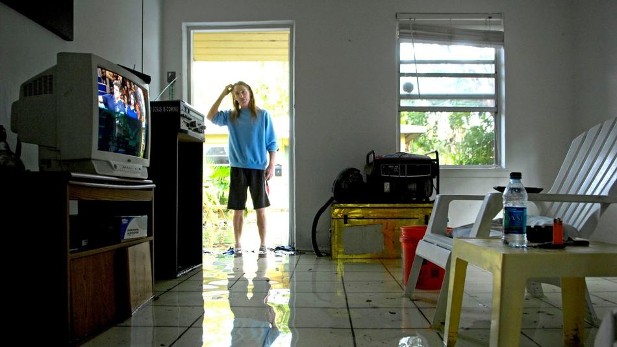
A Fort Lauderdale homeowner inspects damage from flooding. Increasing water damage claims are the focus of new bills
filed before the Florida Legislature meets beginning March 7, 2017. (Susan Stocker / Sun Sentinel)
By Ron Hurtibise
Sun Sentinel – February 17, 2017
Plaintiffs attorneys hired by contractors working under an “Assignment of Benefits” would be barred from collecting so-called one-way attorneys fees if the state Legislature enacts a bill filed Friday.
The bill, crafted with input from state Insurance Commissioner David Altmaier and state-run Citizens Property Insurance Corp., aims to quell rising losses that the property insurance industry warns will spur premium increases for the foreseeable future.
Officials of Citizens, private insurers and their allies have been warning for several years about skyrocketing claims costs driven primarily by a dozen or so South Florida law firms and a small number of repair contractors.
Reform proponents say the law firms teach repair contractors, including roofing companies, auto glass repair shops and water damage restoration companies, how to talk homeowners into signing over the benefits of their insurance policies, so they can “stand in the insured’s shoes” to bill the insurers.
The contractors inflate their work invoices, and then the attorneys quickly file lawsuits if the insurance companies offer to pay less than the full invoices. If the insurers later agree to settle the cases by paying more than their original offers, attorneys are entitled under the one-way attorney fee law to collect thousands of dollars in legal fees from the insurers.
“Our focus is to prevent the rapid increase in [homeowner insurance] rates that we’ve seen over the past year or 18 months,” Altmaier said in an interview Friday. “This legislation is surgical enough to address abuses while allowing folks who are doing things the right way to continue to do it the right way.”
The bill would not prevent attorneys hired directly by homeowners from collecting fees in lawsuits brought against insurers. That’s the original intent of the one-way attorney’s fee law, said Michael Carlson, executive director of the Personal Insurance Federation of Florida.
“The insured is absolutely protected with no limitation to sue their insurance company and get their lawyer paid under the one-way fee statute,” Carlson said.
The law, in place since 1893, is intended to enable policyholders to sue insurance companies without the threat of having to pay the insurance company’s legal fees if they don’t win. But if they do win, the insurance company has to pay the customer’s legal fees.
Citizens and other insurers say the law has been misused by contractors working under assignments, and the attorneys representing them, by filing hundreds of lawsuits without risk of being liable for insurers’ attorneys fees.
Without that protection from risk, critics say, attorneys wouldn’t have the same incentive to file so many lawsuits.
Legislative bills aiming to curb assignment of benefits-related insurance losses over the past four years have died in stalemates between lawmakers loyal to insurers and trial attorneys.
This year’s bill is likely to meet stiff opposition from plaintiffs attorneys as well.
Lee Jacobson, spokesman for the Florida Justice Association, which represents trial attorneys, called the bill “the insurance industry’s wish list,” adding it “tips the playing field against homeowners in favor of insurance companies.”
Trial attorneys dispute insurers’ positions that claims under assignments are abusive, contending instead that insurers too often delay, deny and underpay claims. They say contractors are best suited to determine the necessary scope of repairs and to deal directly with insurers for payment.
“Under this legislation, homeowners in desperate need of emergency repairs would have to either provide large amounts of cash up front, or face having liens placed on their property [by contractors],” Jacobson wrote. “That is because contractors making emergency home repairs will no longer agree to deal directly with the homeowners’ insurance company for payment.”
Recent court rulings have affirmed third parties’ rights to collect one-way attorneys fees under assignments.
A report released last week by the Florida Justice Reform Institute said litigation against insurers has increased 280 percent since 2000 while Florida’s population has only increased 26 percent. The institute urged the Legislature to return the one-way attorney fee statute to its original intent as a tool exclusively for policyholders.
Barry Gilway, president and CEO of Citizens, has been warning for nearly a year that Assignment of Benefits-driven cost increases would force the company to raise home insurance premiums by the 10 percent maximum allowed by state law indefinitely.
Average Citizens premiums in the tricounty region increased from about $2,900 in 2016 to $3,200 in 2017 and will exceed $4,000 in just three years if action isn’t taken, he said.
Ninety-six percent of water-damage claims originate in the tricounty region, and 45 percent of water claims resulted in litigation in 2016 — up from less than 15 percent in 2011.
Because most losses occur in South Florida, policyholders in the region must cover those losses with higher premiums.
The share of each South Florida policyholder’s premium paid out for non-weather-related water claims has increased from $637 in 2010 to $1,882 in 2017, according to Citizens.
In an email Friday, Citizens spokesman Michael Peltier said the bill would “provide meaningful benefit to consumers” and called Assignment of Benefits reform “Citizens’ number-one priority for the coming session”
Other policyholder protections in the bill include:
* Contractors would be required to notify insurance companies of an assignment within three days after it is signed by a policyholder.
* Contactors working under an assignment would be barred from suing homeowners or placing liens on their homes if they fail to collect their full invoices from insurance companies.
* Policyholders would have seven business days to rescind the assignment without any penalty or cancellation fee.
* An assignment would have to include a written, itemized work estimate.
* Contractors would be required to submit records upon request and submit to examinations under oath.
The Senate bill was sponsored by Dorothy Hukill, R-Ormond Beach and co-introduced by Kathleen Passidomo, R-Naples.
A House version will be sponsored by James Grant, R-Tampa and co-sponsored by Rene Plasencia, R-Titusville, Altmaier said.
Other bills related to the Assignment of Benefits issue are likely to be filed this year, Altmaier said.
All face a long road to enactment. Among their first stops will be the Senate Banking & Insurance Committee and its new chairwoman, Anitere Flores, R-Miami, who said in January that she plans to look critically at any proposals backed by the insurance industry and to ask for data to back up claims that a crisis exists.
http://www.sun-sentinel.com/business/fl-bz-pressure-grows-for-insurance-reform-20170217-story.html