
Florida Justice Reform Institute
  • Home
  • About
    • Mission
    • Meet the President
  • Legislative
    • On The Front Line
    • Achievements
    • 2026 Legislation
  • Appellate Work
  • FJRI in the News
  • Get Involved
    • Become a Member
    • The Committee for Florida Justice Reform
    • Contact
  • Click to open the search input field Click to open the search input field Search
  • Menu Menu
Florida Justice Reform Institute

‘Do justice’: House panel advances tweaks to health insurance lawsuit rules

March 21, 2025/in Florida Politics
Florida Politics

Jesse Scheckner – March 21, 2025

‘We got it wrong in 2023. I think we’re fixing it now.’
Legislation to improve two-year-old guardrails for health insurance lawsuits cleared its first House hurdle this week with uniform support on the dais, but mixed reviews from stakeholders.

Members of the House Civil Justice and Claims Subcommittee voted 15-0 for HB 947, which targets a law passed in 2023 to tamp down on lawsuit abuses in Florida.

Supporters say the new, three-page proposal fixes confusion over the 2023 law, through small but vital tweaks, swapping the word “may” for “shall” to afford plaintiffs, defendants and courts the flexibility to include all information pertinent to a case.

Opponents argue it will remove beneficial guidance that outlined mandatory information cases must include while disincentivizing unreasonable claims.

Miami Republican Rep. Omar Blanco, the bill’s sponsor, said HB 947 “promotes consistency, clarity and trust in Florida’s legal system.”

“I’m on no side of anybody but the people who are suffering and to do justice for what has transpired,” he said. “A couple years ago, this took a turn for the worse, and now we’re looking to right that and take a path to a better solution for everybody.”

HB 947, which would go into effect July 1, would allow any court-approved evidence demonstrating the actual value of medical treatments or services, rather than predefined criteria — 120% and 170% reimbursement rates for Medicare and Medicaid, respectively — that is currently allowed.

It would permit evidence in cases about the amount of health care coverage insurers are obligated to pay, reasonable and customary rates, or the amount paid under a letter of protection (LOP) for past unpaid charges. Similar evidence types for future medical treatments or services would also be admissible.

That’s important, said Davie Democratic Rep. Mike Gottlieb, a lawyer, because Medicare and Medicaid rates are “generally significantly lower than what is reasonable and customary” and are not ideal benchmarks.

“Anybody on the defense can bring in the Medicaid or Medicare if they believe that’s reasonable or customary, and a jury can see and hear that evidence,” he said. “This is a better bill. I think we got it wrong in 2023. I think we’re fixing it now.”

Punta Gorda Republican Rep. Vanessa Oliver, a lawyer-turned-ambulance company CEO, agreed “health care rates are all over the place” and that the “government-imposed rate is the floor,” in terms of cost.

“Juries need to see every single (data point and cost) and hear all the relevant testimony so they can make a good, informed decision,” she said.
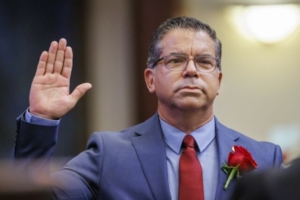
TALLAHASSEE, FLA. 11/19/24-Rep. Omar Blanco, R-Miami, takes the oath of office during Organizational Session, Tuesday at the Capitol in Tallahassee.
COLIN HACKLEY PHOTO

Public arguments on both sides of the issue were ample at the Thursday committee meeting. Organizations and companies opposing HB 947 included the Florida Insurance Council, The Doctors Company, U.S. Chamber of Commerce, State Farm, Publix, American Property Casualty Insurance Association, Uber, Personal Insurance Federation of Florida and Associated Industries of Florida.

Laurette Balinsky of the Florida Justice Reform Institute said the bill would “undo all the good progress (Florida) made on transparency and damages since 2023,” before which charges on bills were “not grounded in reality.”

Balinsky said health care costs have fallen since Gov. Ron DeSantis signed the 2023 bill (HB 837), a priority for then-Senate President Kathleen Passidomo and House Speaker Paul Renner. She said swapping “may” for “shall” will eliminate uniformity in what evidence must be presented to jurors, replacing it with a discretionary, inconsistent standard.

Ellin Kunz, a certified medical auditor working for Associated Industries of Florida with more than three decades of experience in health care work, said courts before 2023 had a “complete lack of guidance as to what constitutes reasonable value of health care,” but that’s no longer the case.

“We now have guidelines in place to provide objective benchmarks,” she said. “By removing these benchmarks, we will once again not have anything objective.”

But that’s not what HB 947 would do, according to Waylon Thompson of the Florida Justice Association. He noted that when HB 837 passed two years ago, its sponsor, former Sarasota Republican Rep. Tommy Gregory, said its goal was to enable juries to hear all the evidence plaintiffs and defendants bring.

“That’s a fair system,” he said. “Unfortunately, it did not bring balance in application. … Now, the plaintiff is required to not only produce the evidence of the value of the reasonable medical expenses that were incurred, but they also have to bring forth evidence that supports the defendant’s ability to then say the treatment was not proper (and) the expense was not reasonable.”

Thompson cited what he said are conflicting parts of the relevant statute (768.0427). In one section, (b)1, it says the plaintiff “shall” — must — introduce evidence of what health insurance will pay. He said if the plaintiff does not do this, they don’t get any compensation for medical expenses.

And the problem, he said, is that section runs contrary to another subsection, (e), which states, “Individual contracts between providers and authorized commercial insurers or authorized health maintenance organizations are not subject to discovery or disclosure and are not admissible into evidence.”

Thompson pointed out that other bills advancing this Session are also “cleaning up” language in Florida Statutes by replacing “shall” with “may.”

“That’s what needs to be done, and that’s what the bill is doing here,” he said. “It’s saying evidence may include from either the plaintiff or the defendant all the evidence regarding the medical care and (the) cost of it.”

The Florida Medical Association, Florida Chiropractic Association and Anthony Albert, an orthopedic surgeon from St. Petersburg, also appeared at the meeting to support HB 947.

Shortly after the measure advanced Thursday, Florida Chamber of Commerce Mark Wilson issued a statement expressing disappointment.

The bill, he said, undoes the progress made to rebalance Florida’s civil justice system by reinstituting an abusive legal practice that artificially drives up medical damages and allows a handful of unscrupulous doctors and billboard trial lawyers to literally inflate verdicts and exploit the system at the expense of Florida families and local businesses.”

HB 947 will next go to the House Judiciary Committee, its last stop before the House floor. Its upper-chamber companion (SB 1520) by Fort Pierce Republican Sen. Erin Grall awaits a hearing before the first of three committees to which it was referred this month.


‘Do justice’: House panel advances tweaks to health insurance lawsuit rules

https://www.fljustice.org/wp-content/uploads/2024/11/fjri-news.jpg 800 800 Becky Lannon https://www.fljustice.org/wp-content/uploads/2024/11/Florida-Justice-Reform-Institute.jpg Becky Lannon2025-03-21 16:17:122025-05-18 16:41:54‘Do justice’: House panel advances tweaks to health insurance lawsuit rules
Florida Justice Reform Institute

Lobbyist scolded for ‘scare tactics’ in committee debate on wrongful-death bill

March 20, 2025/in Florida Phoenix

Florida Phoenix

‘I expect you bring facts and data and not scare tactics and opinions.’

By: Christine Sexton – March 20, 2025

(Photo by Kieferpix/Getty Images)

Rep. Hillary Cassel on Thursday blasted a lobbyist for his testimony on a bill that would increase the potential for wrongful death lawsuits to be filed against Florida doctors and hospitals, accusing him of using scare tactics to try to sink the bill.

During public testimony on HB 6017 before the House Judiciary Committee, attorney Mark Berlick said allowing adult children of single parents to sue physicians and hospitals for noneconomic damages, such as pain and suffering, would open the door to estranged children suing Florida’s hospitals and physicians.

Berlick, an attorney with the Bolin Law Group, said he represented the Florida Justice Reform Institute, which champions lawsuit limitations.

He testified that the “bulk” of people who would be filing medical malpractice lawsuits are going to be nonstate residents who are estranged from family members who live in Florida.

“So, though you’ll end up with the individuals that will end up with a check being sent to them for an individual that never sets foot in the state of Florida, they won’t receive any medical care here. They won’t have any taxes paid here. They’ll just simply receive a settlement check from the death of their relatives,” he said.

The comments didn’t sit well with Cassel, a Republican who noted that the majority of the people in the committee hearing who testified on behalf of the bill were Florida residents.

“We as members expect that the people that come before us to provide information are going to do so truthfully and with facts, and for the gentleman from the Florida Justice Reform Institute to come before us and assert that the people that are going to benefit from this don’t live in this state and must be estranged from their families, and we’re going to just be writing checks to estranged members, doesn’t have an ounce of data to support that,” Cassel said.

“And that was nothing more than a scare tactic to this committee, and it’s an insult on our intelligence, and it’s an insult to the people who are here today, who are clearly not estranged from the loved ones that they have lost. And of the ones that have testified, all but two are Floridians. So, if you’re going to come before this committee and make assertions about what’s going to happen if we pass legislation, I expect you bring facts and data and not scare tactics and opinions.”

Quid pro quo

The insurance industry, Florida hospitals associations, and organized medicine such as the Florida Medical and Florida Osteopathic associations, oppose the bill in its current form. But they are willing to support eliminating the ban if the Legislature agrees to limit damages for pain and suffering.

Otherwise, increasing civil liability will further increase medical malpractice insurance rates and drive physicians away from practicing, the opponents say.

To date, neither the House nor Senate have included the industry-coveted caps in the bill. The Senate passed its version, SB 734, earlier this week.

Rudman returns

There are some individual physicians, though, who support the proposal, including former state Rep. Joel Rudman.

Rudman resigned from the House to launch an unsuccessful congressional bid but returned Thursday to testify in support of the bill.

A Navarre physician, Rudman said he came to Florida from Alabama during the 1990s and the high medical malpractice rates didn’t drive him away. The premiums he pays today, he said, haven’t changed in a decade. And the costs of the insurance protection from lawsuits isn’t among his top three overhead costs.

“I’ve had a license since 1997, and I’ve never been sued. I’m very proud of that,” Rudman said. “It’s not because of some bogus protections carve-out in the current statute. It’s because I’m damn good at my job. And this bill will not change that, either. The only doctors that want to see this statute remain in place are bad doctors and, unfortunately, we have a few of those in the state of Florida.”

https://floridaphoenix.com/2025/03/20/lobbyist-scolded-for-scare-tactics-in-committee-debate-on-wrongful-death-bill/

https://www.fljustice.org/wp-content/uploads/2024/11/fjri-news.jpg 800 800 Becky Lannon https://www.fljustice.org/wp-content/uploads/2024/11/Florida-Justice-Reform-Institute.jpg Becky Lannon2025-03-20 22:23:432025-03-20 22:32:42Lobbyist scolded for ‘scare tactics’ in committee debate on wrongful-death bill
Florida Justice Reform Institute

Lobbyist scolded for ‘scare tactics’ in committee debate on wrongful-death bill

March 20, 2025/in Yahoo News

Christine Sexton
Thu, March 20, 2025 at 12:20 PM EDT

(Photo by Kieferpix/Getty Images)

Rep. Hillary Cassel on Thursday blasted a lobbyist for his testimony on a bill that would increase the potential for wrongful death lawsuits to be filed against Florida doctors and hospitals, accusing him of using scare tactics to try to sink the bill.

During public testimony on HB 6017 before the House Judiciary Committee, attorney Mark Berlick said allowing adult children of single parents to sue physicians and hospitals for noneconomic damages, such as pain and suffering, would open the door to estranged children suing Florida’s hospitals and physicians.

Berlick, an attorney with the Bolin Law Group, said he represented the Florida Justice Reform Institute, which champions lawsuit limitations.

He testified that the “bulk” of people who would be filing medical malpractice lawsuits are going to be nonstate residents who are estranged from family members who live in Florida.

“So, though you’ll end up with the individuals that will end up with a check being sent to them for an individual that never sets foot in the state of Florida, they won’t receive any medical care here. They won’t have any taxes paid here. They’ll just simply receive a settlement check from the death of their relatives,” he said.

The comments didn’t sit well with Cassel, a Republican who noted that the majority of the people in the committee hearing who testified on behalf of the bill were Florida residents.

“We as members expect that the people that come before us to provide information are going to do so truthfully and with facts, and for the gentleman from the Florida Justice Reform Institute to come before us and assert that the people that are going to benefit from this don’t live in this state and must be estranged from their families, and we’re going to just be writing checks to estranged members, doesn’t have an ounce of data to support that,” Cassel said.

“And that was nothing more than a scare tactic to this committee, and it’s an insult on our intelligence, and it’s an insult to the people who are here today, who are clearly not estranged from the loved ones that they have lost. And of the ones that have testified, all but two are Floridians. So, if you’re going to come before this committee and make assertions about what’s going to happen if we pass legislation, I expect you bring facts and data and not scare tactics and opinions.”

Quid pro quo
The insurance industry, Florida hospitals associations, and organized medicine such as the Florida Medical and Florida Osteopathic associations, oppose the bill in its current form. But they are willing to support eliminating the ban if the Legislature agrees to limit damages for pain and suffering.

Otherwise, increasing civil liability will further increase medical malpractice insurance rates and drive physicians away from practicing, the opponents say.

To date, neither the House nor Senate have included the industry-coveted caps in the bill. The Senate passed its version, SB 734, earlier this week.

Rudman returns
There are some individual physicians, though, who support the proposal, including former state Rep. Joel Rudman.

Rudman resigned from the House to launch an unsuccessful congressional bid but returned Thursday to testify in support of the bill.

A Navarre physician, Rudman said he came to Florida from Alabama during the 1990s and the high medical malpractice rates didn’t drive him away. The premiums he pays today, he said, haven’t changed in a decade. And the costs of the insurance protection from lawsuits isn’t among his top three overhead costs.

“I’ve had a license since 1997, and I’ve never been sued. I’m very proud of that,” Rudman said. “It’s not because of some bogus protections carve-out in the current statute. It’s because I’m damn good at my job. And this bill will not change that, either. The only doctors that want to see this statute remain in place are bad doctors and, unfortunately, we have a few of those in the state of Florida.”

https://www.yahoo.com/news/lobbyist-scolded-scare-tactics-committee-162025370.html

https://www.fljustice.org/wp-content/uploads/2024/11/fjri-news.jpg 800 800 Becky Lannon https://www.fljustice.org/wp-content/uploads/2024/11/Florida-Justice-Reform-Institute.jpg Becky Lannon2025-03-20 16:45:582025-05-18 16:47:37Lobbyist scolded for ‘scare tactics’ in committee debate on wrongful-death bill
Florida Justice Reform Institute

‘Creating parity’: Repeal of Florida’s ‘free kill’ law cleared for House floor

March 20, 2025/in Florida Politics

Florida Politics

Jesse Scheckner – March 20, 2025

‘If a bad doctor wants to leave, bye.’

House lawmakers are moving closer to repealing a unique Florida law that today blocks many medical malpractice lawsuits.

Members of the House Judiciary Committee voted 20-1 for HB 6017, which would erase a state provision referred to by critics as Florida’s “free kill” law. Members of the committee sided with the families of lost loved ones over doctors and insurers who warn of adverse consequences.

The bill will next be heard on the House floor.

Florida law today prohibits adult children and parents older than 25 from collecting negligence and noneconomic damages for medical malpractice after the death of patients. Florida enacted the law in 1990 and remains the only state with the restriction.

It was an update to the state’s Wrongful Death Act in 1972, which in part reads, “It is the public policy of the state to shift the losses when a wrongful death occurs from the survivors of the decedents to the wrongdoer.”

The standard applies to all cases except for those involving patient care. And that, by definition, makes it a double standard, according to the bill’s sponsors, Reps. Dana Trabulsy and Johanna López.

Trabulsy, a Fort Pierce Republican, said Thursday that the purpose of her bill isn’t to hurt those working in medicine; it’s to provide equal legal protections to everyone in the Sunshine State.

“Do you believe that the life of someone lost due to negligence or malpractice is less than any other case where someone could regain noneconomic damages for wrongdoing?” she said.

“We do a very good job in the medical field here. This is not an attack on doctors whatsoever. This is creating parity in the statute and among folks that can recover noneconomic damage.”

López, an Orlando Democrat, said the measure would deliver “fairness and justice” to people who have long had little recourse after a doctor’s carelessness devastated them.

As was the case in the bill’s prior stop and in Senate discussions about its upper-chamber analog (SB 734), advocates for and against the proposal were numerous and impassioned.

Travis Creighton, one of many surviving family members, cited several Florida Supreme Court rules that conflict with the statute in question (768.21). The statute that HB 6017 aims to repeal, he said, “arbitrarily discriminates between classes of survivors (and strips) rights not for lack of harm but through a last-minute legislative carve-out.”

Karen Murillo of AARP Florida said the statute “discriminates against older and vulnerable adults” and should be deleted.

“This law has been on the books for years. It was put in place because medical malpractice insurers promised that this was going to reduce the cost for health care practitioners in this state and reduce the cost of health care,” she said. “It did not. Instead, it protected insurers from indefensible acts of medical negligence.”

Former Navarre Republican Rep. Joel Rudman, a long-practicing physician, spoke for HB 6017 too, arguing that the only doctors who want to see the statute remain in place are bad doctors. He also rejected arguments that there is a “medical malpractice meltdown” in Florida, with a surge in such legal actions in recent years.

“As a physician, my malpractice rates have remained static in the last decade. It’s not even one of (my) top three expenditures,” he said. “Doctors aren’t going to leave Florida because of this bill — no good doctor. If a bad doctor wants to leave, bye.”

A slew of medical and insurance organizations urged the committee to vote down the bill, including the Small Business and Consumers Alliance, ProAssurance Corp., The Doctors Company, Associated Industries of Florida, Florida Medical Association, Florida Osteopathic Medical Association, Florida Justice Reform Institute, Florida Chamber of Commerce, Florida Council for Safe Communities and the Small Business and Consumer Alliance.

Shelly Nick, a registered nurse now working in health care risk management, called HB 6017 “compassionate but misdirected” and predicted it would lead to at least 500 additional wrongful death lawsuits yearly.

Vivian Gallo, Managing Director of health care casualty coverage and claims for Marsh McLennan, said that since 2019, Florida’s medical malpractice insurance premiums have been up to 70% higher than national rates. And over the same stretch, she said, premiums and deductibles hospitals must pay have both risen 60%.

That’s unusual since increased deductibles often accompany level or declining premiums, she said, and it’s because of the rising number of so-called “nuclear verdicts” in medical malpractice suits — awards of $20 million or more — that since 2017 have seen numerous insurers exit the Florida market.

It’s not unique to Florida — nuclear verdicts have increased 400% in recent years — but it’s worse here, Gallo said.

“In Florida, between 2010 and 2020, there were 11 nuclear verdicts,” she said. “Since 2023, there were eight.”

Ocoee Democratic Rep. LaVon Bracy Davis said she’s seen firsthand the unhealed wounds that “free kill” causes.

“This statute says that if you’re over 25 and lose a parent to medical negligence, your grief is worth nothing in the eyes of the law. It tells grieving families that their loved ones’ lives didn’t count,” she said. “This is not justice.”

Rep. Hillary Cassel, a Dania Beach Republican, said the bottom line is that Florida doesn’t want bad doctors, and the ones here should be held accountable.

“I don’t want to have to go through what these families went through,” she said.

She then chastised Mark Berlick of the Florida Justice Reform Institute for asserting that HB 6017 would incentivize out-of-town opportunists to sue doctors and hospitals after the death of estranged family members.

“(He) doesn’t have an ounce of data to support that, and that was nothing more than a scare tactic, (an) insult on our intelligence and an insult to the people who are here today who are clearly not estranged from the loved ones they have lost,” she said. “If you’re going to come before this committee and make assertions about what’s going to happen if we pass legislation, I expect you to bring facts and data and not scare tactics and opinions.”

Miami Lakes Republican Rep. Tom Fabricio cast the sole “no” Thursday. He didn’t ask questions or argue against the bill.

It marked the only vote in two committee stops against HB 6017, which has co-sponsorship from Republican Reps. Debbie Mayfield of Melbourne and Susan Plascencia of Orlando, as well as Democratic Rep. Anna Eskamani of Orlando.

HB 6017 awaits scheduling for House floor consideration. SB 734, sponsored by Jacksonville Republican Sen. Clay Yarborough, pends a hearing before the Senate Rules Committee before heading to a floor vote. It passed in the Senate Judiciary Committee and Senate Appropriations Subcommittee on Health and Human Services by 9-2 and 8-2 votes, respectively.

‘Creating parity’: Repeal of Florida’s ‘free kill’ law cleared for House floor

https://www.fljustice.org/wp-content/uploads/2024/11/fjri-news.jpg 800 800 Becky Lannon https://www.fljustice.org/wp-content/uploads/2024/11/Florida-Justice-Reform-Institute.jpg Becky Lannon2025-03-20 15:04:162025-03-20 15:04:16‘Creating parity’: Repeal of Florida’s ‘free kill’ law cleared for House floor
Florida Justice Reform Institute

‘Not about putting a price on a life’: Sides collide on medical malpractice in Legislature

March 19, 2025/in Florida Health News

Health News Florida

Health News Florida | By Jim Saunders – News Service of Florida
Published March 19, 2025

A Senate committee approved a bill that would clear the way for more malpractice lawsuits over patient deaths.

On one side are people telling heart-wrenching stories about the deaths of their adult children or parents. On the other are people warning about shortages of doctors and soaring medical-malpractice insurance costs.

The two sides are colliding in the Florida Legislature, where a Senate committee Tuesday approved a bill that would change a decades-old law and clear the way for more malpractice lawsuits over patient deaths.

“The bill is about accountability, the value of life and ensuring our laws are just,” bill sponsor Clay Yarborough, R-Jacksonville, said moments before the Senate Health and Human Services Appropriations Committee voted 8-2 to approve the measure (SB 734).

But Sen. Gayle Harrell, a Stuart Republican who joined Sen. Colleen Burton, R-Lakeland, in voting against the bill, said “there are other ways to solve this problem without creating more problems in the system.” She and other opponents contend that high insurance costs drive doctors away from the state.

“We are desperately in need of physicians,” Harrell said. “If this bill passes, we are going to have an increase in medical malpractice (insurance rates). We are already the highest in the country, and it will continue.”

Proposals to change the 1990 law have surfaced periodically, but they could have more momentum this year. Yarborough’s bill has been approved by two committees, while a House version (HB 6017) has cleared one panel.

The bills involve wrongful-death lawsuits and what are known as “non-economic” damages for such things as pain and suffering.

They would undo part of the 1990 law that prevents people from seeking non-economic damages in certain circumstances. People who are 25 years old or older cannot seek such damages in medical-malpractice cases involving deaths of their parents. Also, parents cannot seek such damages in malpractice cases involving the deaths of their children who are 25 or older.

Numerous speakers have appeared at the Senate and House meetings to tell stories about how their parents or adult children died after medical malpractice — and an inability to pursue damages in the deaths.

Karen Aguilar said Tuesday her 87-year-old father died in January because of alleged negligence at a Pasco County hospital.

“Some argue that financial compensation cannot replace a loved one, and you’re correct,” Aguilar told senators. “But wrongful-death lawsuits are not about putting a price on a life. They are about ensuring accountability, deterring negligence and getting families a pathway to justice.”

But Andrew Bolin, an attorney who represents doctors and hospitals and spoke Tuesday on behalf of the business-backed Florida Justice Reform Institute, said clearing the way for more medical-malpractice lawsuits would worsen problems such as what he described as “OB deserts” — areas of the state that do not have obstetrical care.

“Non-profit hospitals have to stay open,” David Mica, a lobbyist for the Florida Hospital Association, told senators. “One-third of your rural hospitals in this state are operating at a negative margin.”


https://health.wusf.usf.edu/health-news-florida/2025-03-19/sides-collide-medical-malpractice-issue-florida-legislature-2025

https://www.fljustice.org/wp-content/uploads/2024/11/fjri-news.jpg 800 800 Becky Lannon https://www.fljustice.org/wp-content/uploads/2024/11/Florida-Justice-Reform-Institute.jpg Becky Lannon2025-03-19 20:03:222025-03-20 20:55:45‘Not about putting a price on a life’: Sides collide on medical malpractice in Legislature
Florida Justice Reform Institute

‘Not about putting a price on a life’: Sides collide on medical malpractice in Legislature

March 19, 2025/in WUSF
Wusf

WUSF | By Jim Saunders – News Service of Florida
Published March 19, 2025 at 5:00 AM EDT

A Senate committee approved a bill that would clear the way for more malpractice lawsuits over patient deaths.

On one side are people telling heart-wrenching stories about the deaths of their adult children or parents. On the other are people warning about shortages of doctors and soaring medical-malpractice insurance costs.

The two sides are colliding in the Florida Legislature, where a Senate committee Tuesday approved a bill that would change a decades-old law and clear the way for more malpractice lawsuits over patient deaths.

“The bill is about accountability, the value of life and ensuring our laws are just,” bill sponsor Clay Yarborough, R-Jacksonville, said moments before the Senate Health and Human Services Appropriations Committee voted 8-2 to approve the measure (SB 734).

But Sen. Gayle Harrell, a Stuart Republican who joined Sen. Colleen Burton, R-Lakeland, in voting against the bill, said “there are other ways to solve this problem without creating more problems in the system.” She and other opponents contend that high insurance costs drive doctors away from the state.

“We are desperately in need of physicians,” Harrell said. “If this bill passes, we are going to have an increase in medical malpractice (insurance rates). We are already the highest in the country, and it will continue.”

Proposals to change the 1990 law have surfaced periodically, but they could have more momentum this year. Yarborough’s bill has been approved by two committees, while a House version (HB 6017) has cleared one panel.

The bills involve wrongful-death lawsuits and what are known as “non-economic” damages for such things as pain and suffering.

They would undo part of the 1990 law that prevents people from seeking non-economic damages in certain circumstances. People who are 25 years old or older cannot seek such damages in medical-malpractice cases involving deaths of their parents. Also, parents cannot seek such damages in malpractice cases involving the deaths of their children who are 25 or older.

Numerous speakers have appeared at the Senate and House meetings to tell stories about how their parents or adult children died after medical malpractice — and an inability to pursue damages in the deaths.

Karen Aguilar said Tuesday her 87-year-old father died in January because of alleged negligence at a Pasco County hospital.

“Some argue that financial compensation cannot replace a loved one, and you’re correct,” Aguilar told senators. “But wrongful-death lawsuits are not about putting a price on a life. They are about ensuring accountability, deterring negligence and getting families a pathway to justice.”

But Andrew Bolin, an attorney who represents doctors and hospitals and spoke Tuesday on behalf of the business-backed Florida Justice Reform Institute, said clearing the way for more medical-malpractice lawsuits would worsen problems such as what he described as “OB deserts” — areas of the state that do not have obstetrical care.

“Non-profit hospitals have to stay open,” David Mica, a lobbyist for the Florida Hospital Association, told senators. “One-third of your rural hospitals in this state are operating at a negative margin.”

https://www.wusf.org/politics-issues/2025-03-19/sides-collide-medical-malpractice-issue-florida-legislature-2025?_gl=1*1g78ggy*_ga*NTk2MTI2Ny4xNzQ3MjY5OTgz*_ga_Q6EH4FZY1W*czE3NDc2MDMzODAkbzMkZzAkdDE3NDc2MDMzODckajAkbDAkaDA.

https://www.fljustice.org/wp-content/uploads/2024/11/fjri-news.jpg 800 800 Becky Lannon https://www.fljustice.org/wp-content/uploads/2024/11/Florida-Justice-Reform-Institute.jpg Becky Lannon2025-03-19 17:31:312025-05-18 17:31:55‘Not about putting a price on a life’: Sides collide on medical malpractice in Legislature
Florida Justice Reform Institute

If this bill passes it will eradicate Florida’s insurance market – FJRI

March 19, 2025/in Insurance Business

Subcommittee votes overwhelmingly in favor of insurance attorney’s contentious legislation

By Matthew Sellers – Mar 19, 2025

A Florida House panel has advanced a measure that could undo much of the work that has been done in the Sunshine State to reduce premiums, and could shift the financial burden of legal battles in insurance disputes back on to insurers in certain cases, reviving a debate over consumer protections and industry stability.

The state has long struggled with a high volume of insurance-related lawsuits, particularly involving claims for roof damage and water losses. Some attorneys and contractors have been accused of exploiting assignment of benefits (AOB) agreements and filing excessive or inflated lawsuits, leading to substantial legal costs for insurers. Florida accounts for a disproportionate percentage of the nation’s property insurance lawsuits, despite representing a much smaller share of total policies.

Last week, the House Civil Justice and Claims Subcommittee voted overwhelmingly, 16-1, in favor of HB 1551, introduced by Rep. Hillary Cassel, a Republican from Broward County and a practicing insurance attorney. The bill would allow policyholders to recover attorney fees if they prevail in lawsuits against their insurers, reversing recent changes that critics say stripped consumers of crucial leverage.

Cassel described the legislation as a middle-ground solution aimed at curbing exploitative practices while discouraging unnecessary litigation. “HB 1551 takes a balanced approach to attorney fee awards in insurance contract disputes,” she told lawmakers. “This bill aims to reform attorney fees awards in insurance litigation by promoting fairness and reducing unnecessary lawsuits.”

In 2022 and 2023, Florida lawmakers passed sweeping tort reform measures that eliminated what’s known as the “one-way attorney fee” provision, which previously enabled plaintiffs to recover legal costs when suing insurance companies. Insurers had argued the rule encouraged frivolous claims, while consumer advocates contended it gave policyholders a fighting chance against powerful insurance firms.

Under HB 1551, courts would apply a “prevailing party” standard – commonly referred to as a “loser pays” system – when determining whether insurers or policyholders are responsible for attorneys’ fees. Cassel stressed that the approach still requires consumers to share some financial risk while ensuring bad-faith denials by insurers don’t go unchecked.

Industry groups, however, warned the bill threatens the fragile recovery of Florida’s insurance market. Katelyn Ferry, representing the Florida Justice Reform Institute, argued the proposal could reverse recent progress. “Make no mistake: If this bill passes, it’ll eradicate Florida’s insurance market,” Ferry said. She credited previous reforms with curbing premium hikes and attracting new insurers to the state, questioning why lawmakers would “fix” a system she claims is working.

Meanwhile, Todd Michaels, president of the Florida Justice Association, voiced strong support for the bill, saying it would help restore fairness to a lopsided process. The core issue, Michaels said, is simple: “Shouldn’t it be the wrongdoer?” referring to insurers who improperly deny legitimate claims, prompting costly litigation.

House Speaker Daniel Perez, a Miami lawyer, has pledged to focus on consumer-oriented reforms. His comments, coupled with mounting scrutiny of the insurance sector’s financial transparency, have shifted the tone in Tallahassee.

Adding to the pressure, Florida Insurance Commissioner Michael Yaworsky acknowledged last week that his office may have fallen short in thoroughly investigating insurer conduct, citing staff shortages and other challenges during the height of the state’s insurance crisis. Executives at several insurance firms have disputed allegations of impropriety, arguing that the reports do not provide a complete picture.

During the subcommittee hearing, Democratic Rep. Ashley Gantt, an attorney from Miami, urged colleagues to back Cassel’s bill, referencing the recent reporting. Gantt compared insurers’ attempts to shift blame to plaintiffs’ lawyers to a “Scooby-Doo” villain reveal.

“Peel back the mask, and the real culprits are unscrupulous insurers,” Gantt said. “This bill provides the justice that our constituents actually need.”

https://www.insurancebusinessmag.com/us/news/legal-insights/if-this-bill-passes-it-will-eradicate-floridas-insurance-market–fjri-529037.aspx

https://www.fljustice.org/wp-content/uploads/2024/11/fjri-news.jpg 800 800 Becky Lannon https://www.fljustice.org/wp-content/uploads/2024/11/Florida-Justice-Reform-Institute.jpg Becky Lannon2025-03-19 17:16:412025-05-18 17:17:57If this bill passes it will eradicate Florida’s insurance market – FJRI
Florida Justice Reform Institute

House Advances Insurance Reform: What HB 1551 Means for Florida

March 19, 2025/in robertjrussellcompanies

robertjrussellcompanies

Posted on March 19, 2025 by robertjrussellcompanies

A Florida House panel has advanced a measure that could undo much of the work that has been done in the Sunshine State to reduce premiums, and could shift the financial burden of legal battles in insurance disputes back on to insurers in certain cases, reviving a debate over consumer protections and industry stability. While many people are talking about this, the most talk is in a Facebook Group – Moving to Florida!

The state has long struggled with a high volume of insurance-related lawsuits, particularly involving claims for roof damage and water losses. Some attorneys and contractors have been accused of exploiting assignment of benefits (AOB) agreements and filing excessive or inflated lawsuits, leading to substantial legal costs for insurers. Florida accounts for a disproportionate percentage of the nation’s property insurance lawsuits, despite representing a much smaller share of total policies.

Last week, the House Civil Justice and Claims Subcommittee voted overwhelmingly, 16-1, in favor of HB 1551, introduced by Rep. Hillary Cassel, a Republican from Broward County and a practicing insurance attorney. The bill would allow policyholders to recover attorney fees if they prevail in lawsuits against their insurers, reversing recent changes that critics say stripped consumers of crucial leverage.

Cassel described the legislation as a middle-ground solution aimed at curbing exploitative practices while discouraging unnecessary litigation. “HB 1551 takes a balanced approach to attorney fee awards in insurance contract disputes,” she told lawmakers. “This bill aims to reform attorney fees awards in insurance litigation by promoting fairness and reducing unnecessary lawsuits.”

In 2022 and 2023, Florida lawmakers passed sweeping tort reform measures that eliminated what’s known as the “one-way attorney fee” provision, which previously enabled plaintiffs to recover legal costs when suing insurance companies. Insurers had argued the rule encouraged frivolous claims, while consumer advocates contended it gave policyholders a fighting chance against powerful insurance firms.

Under HB 1551, courts would apply a “prevailing party” standard – commonly referred to as a “loser pays” system – when determining whether insurers or policyholders are responsible for attorneys’ fees. Cassel stressed that the approach still requires consumers to share some financial risk while ensuring bad-faith denials by insurers don’t go unchecked.

Industry groups, however, warned the bill threatens the fragile recovery of Florida’s insurance market. Katelyn Ferry, representing the Florida Justice Reform Institute, argued the proposal could reverse recent progress. “Make no mistake: If this bill passes, it’ll eradicate Florida’s insurance market,” Ferry said. She credited previous reforms with curbing premium hikes and attracting new insurers to the state, questioning why lawmakers would “fix” a system she claims is working.

Meanwhile, Todd Michaels, president of the Florida Justice Association, voiced strong support for the bill, saying it would help restore fairness to a lopsided process. The core issue, Michaels said, is simple: “Shouldn’t it be the wrongdoer?” referring to insurers who improperly deny legitimate claims, prompting costly litigation.

House Speaker Daniel Perez, a Miami lawyer, has pledged to focus on consumer-oriented reforms. His comments, coupled with mounting scrutiny of the insurance sector’s financial transparency, have shifted the tone in Tallahassee.

Adding to the pressure, Florida Insurance Commissioner Michael Yaworsky acknowledged last week that his office may have fallen short in thoroughly investigating insurer conduct, citing staff shortages and other challenges during the height of the state’s insurance crisis. Executives at several insurance firms have disputed allegations of impropriety, arguing that the reports do not provide a complete picture.

During the subcommittee hearing, Democratic Rep. Ashley Gantt, an attorney from Miami, urged colleagues to back Cassel’s bill, referencing the recent reporting. Gantt compared insurers’ attempts to shift blame to plaintiffs’ lawyers to a “Scooby-Doo” villain reveal.

“Peel back the mask, and the real culprits are unscrupulous insurers,” Gantt said. “This bill provides the justice that our constituents actually need.”

House Advances Insurance Reform: What HB 1551 Means for Florida

https://www.fljustice.org/wp-content/uploads/2024/11/fjri-news.jpg 800 800 Becky Lannon https://www.fljustice.org/wp-content/uploads/2024/11/Florida-Justice-Reform-Institute.jpg Becky Lannon2025-03-19 17:09:512025-05-18 17:10:35House Advances Insurance Reform: What HB 1551 Means for Florida
Florida Justice Reform Institute

If this bill passes it will eradicate Florida’s insurance market – FJRI

March 19, 2025/in Insurance Business

Subcommittee votes overwhelmingly in favor of insurance attorney’s contentious legislation

By Matthew Sellers – Mar 19, 2025

A Florida House panel has advanced a measure that could undo much of the work that has been done in the Sunshine State to reduce premiums, and could shift the financial burden of legal battles in insurance disputes back on to insurers in certain cases, reviving a debate over consumer protections and industry stability.

The state has long struggled with a high volume of insurance-related lawsuits, particularly involving claims for roof damage and water losses. Some attorneys and contractors have been accused of exploiting assignment of benefits (AOB) agreements and filing excessive or inflated lawsuits, leading to substantial legal costs for insurers. Florida accounts for a disproportionate percentage of the nation’s property insurance lawsuits, despite representing a much smaller share of total policies.

Last week, the House Civil Justice and Claims Subcommittee voted overwhelmingly, 16-1, in favor of HB 1551, introduced by Rep. Hillary Cassel, a Republican from Broward County and a practicing insurance attorney. The bill would allow policyholders to recover attorney fees if they prevail in lawsuits against their insurers, reversing recent changes that critics say stripped consumers of crucial leverage.

Cassel described the legislation as a middle-ground solution aimed at curbing exploitative practices while discouraging unnecessary litigation. “HB 1551 takes a balanced approach to attorney fee awards in insurance contract disputes,” she told lawmakers. “This bill aims to reform attorney fees awards in insurance litigation by promoting fairness and reducing unnecessary lawsuits.”

In 2022 and 2023, Florida lawmakers passed sweeping tort reform measures that eliminated what’s known as the “one-way attorney fee” provision, which previously enabled plaintiffs to recover legal costs when suing insurance companies. Insurers had argued the rule encouraged frivolous claims, while consumer advocates contended it gave policyholders a fighting chance against powerful insurance firms.

Under HB 1551, courts would apply a “prevailing party” standard – commonly referred to as a “loser pays” system – when determining whether insurers or policyholders are responsible for attorneys’ fees. Cassel stressed that the approach still requires consumers to share some financial risk while ensuring bad-faith denials by insurers don’t go unchecked.

Industry groups, however, warned the bill threatens the fragile recovery of Florida’s insurance market. Katelyn Ferry, representing the Florida Justice Reform Institute, argued the proposal could reverse recent progress. “Make no mistake: If this bill passes, it’ll eradicate Florida’s insurance market,” Ferry said. She credited previous reforms with curbing premium hikes and attracting new insurers to the state, questioning why lawmakers would “fix” a system she claims is working.

Meanwhile, Todd Michaels, president of the Florida Justice Association, voiced strong support for the bill, saying it would help restore fairness to a lopsided process. The core issue, Michaels said, is simple: “Shouldn’t it be the wrongdoer?” referring to insurers who improperly deny legitimate claims, prompting costly litigation.

House Speaker Daniel Perez, a Miami lawyer, has pledged to focus on consumer-oriented reforms. His comments, coupled with mounting scrutiny of the insurance sector’s financial transparency, have shifted the tone in Tallahassee.

Adding to the pressure, Florida Insurance Commissioner Michael Yaworsky acknowledged last week that his office may have fallen short in thoroughly investigating insurer conduct, citing staff shortages and other challenges during the height of the state’s insurance crisis. Executives at several insurance firms have disputed allegations of impropriety, arguing that the reports do not provide a complete picture.

During the subcommittee hearing, Democratic Rep. Ashley Gantt, an attorney from Miami, urged colleagues to back Cassel’s bill, referencing the recent reporting. Gantt compared insurers’ attempts to shift blame to plaintiffs’ lawyers to a “Scooby-Doo” villain reveal.

“Peel back the mask, and the real culprits are unscrupulous insurers,” Gantt said. “This bill provides the justice that our constituents actually need.”

https://www.insurancebusinessmag.com/us/news/legal-insights/if-this-bill-passes-it-will-eradicate-floridas-insurance-market–fjri-529037.aspx

https://www.fljustice.org/wp-content/uploads/2024/11/fjri-news.jpg 800 800 Becky Lannon https://www.fljustice.org/wp-content/uploads/2024/11/Florida-Justice-Reform-Institute.jpg Becky Lannon2025-03-19 16:13:352025-03-20 20:57:03If this bill passes it will eradicate Florida’s insurance market – FJRI
Florida Justice Reform Institute

MEASURE AIMS TO LEVEL THE PLAYING FIELD FOR CONSUMERS IN INSURANCE DISPUTES

March 18, 2025/in Florida Bar News

Florida Bar News

Mar 18, 2025 By Jim Ash

Insurance companies, in certain circumstances, would be forced to pay a policy holders’ attorney fees under a measure that is moving through the House.

The House Civil Justice and Claims Subcommittee voted 16-1 last week to approve HB 1551 by Republican Rep. Hillary Cassel, a Broward County insurance lawyer.

Cassel said the measure addresses a key provision of recent “tort reforms” that left consumers defenseless against bad actors in the insurance industry.

“HB 1551 takes a balanced approach to attorney fee awards in insurance contract disputes,” Cassel said. “This bill aims to reform attorney fees awards in insurance litigation by promoting fairness and reducing unnecessary lawsuits.”

Lawmakers in 2022 and 2023 eliminated a one-way attorney fee provision in Florida law that favored plaintiffs in insurance disputes. The previous system was designed to level the playing field for consumers, but insurers claim it incentivized frivolous lawsuits.

HB 1551 “creates a prevailing party standard, otherwise known as ‘loser pays,’ for awarding reasonable attorneys’ fees by a judge after a judgment is obtained in an insurance contract dispute,” Cassel said.

That would empower consumers, but still leave them with “skin in the game,” Cassel said.

Florida Justice Reform Institute lobbyist Katelyn Ferry warned the proposal would reverse reforms that stabilized the insurance market, slowed skyrocketing premium increases, and lured 11 new insurers to Florida.

“Make no mistake: If this bill passes, it’ll eradicate Florida’s insurance market,” she said. “Florida has had the lowest premium increase of all of the states, and this is with soaring inflation. Kudos to you. It’s working. Why are we fixing it?”

Florida Justice Association President Todd Michaels said the bill would “restore balance to a system that is broken.”

The debate boils down to whether a policy holder, or an insurer who “wrongfully denied the claim,” and prompted the litigation, should be responsible for paying attorney fees, Michaels said.

“That’s how simple this issue is,” he said. “Shouldn’t it be the wrongdoer?”

Several subcommittee members said they were skeptical about the industry’s claims after recent news reports about a suppressed 2021 industry report that showed insurers were claiming insolvency after shifting profits to affiliates.

A Tampa Bay Times story in February said insurers reported losing $432 million between 2017 and 2019, but their affiliates showed a net income of $1.8 billion.

House Speaker Daniel Perez, a Miami attorney, vowed to focus on consumer-friendly reforms when he assumed command March 4.

Late last week, Florida Insurance Commissioner Michael Yaworsky told the House Insurance Subcommittee that his office may have failed to follow up on the report due to staffing issues and other concerns as they dealt with the insurance crisis. Insurance executives have pushed back, saying the report was incomplete and did not reveal wrongdoing.

Democratic Rep. Ashley Gantt, a Miami attorney, urged fellow Civil Justice and Claims Subcommittee members to support Cassel’s bill.
Gantt said the news reports reminded her of a “Scooby-Doo” cartoon, with trial attorneys being made the pretend villain. Peel back the mask, she said, and the real culprits are unscrupulous insurers.

“It’s insulting,” Gantt said. “This bill provides the justice that our constituents actually need.”

Measure aims to level the playing field for consumers in insurance disputes

https://www.fljustice.org/wp-content/uploads/2024/11/fjri-news.jpg 800 800 Becky Lannon https://www.fljustice.org/wp-content/uploads/2024/11/Florida-Justice-Reform-Institute.jpg Becky Lannon2025-03-18 21:02:302025-03-20 21:02:41MEASURE AIMS TO LEVEL THE PLAYING FIELD FOR CONSUMERS IN INSURANCE DISPUTES
Page 3 of 7‹12345›»

FJRI News Categories

FJRI News Archive

Search Search
Florida Justice Reform Institute

Florida Justice Reform Institute

  • Phone

    (850) 222-0170

  • Hours of Operation

    Monday – Friday, 9 a.m.-5 p.m.

  • Location Location
    Address

    215 South Monroe Street
    Suite 140
    Tallahassee, FL 32301

Site Links

  • The Committee for Florida Justice Reform
  • About
  • Legislative
  • Appellate Work
  • FJRI in the News
  • Get Involved
© 2026 Florida Justice Reform Institute, All Rights Reserved. | Website Hosting & Web Development by RAD TECH
  • Link to Facebook
  • Link to X
  • Link to LinkedIn
Scroll to top Scroll to top Scroll to top