
COVID primary: Some crowded races, dark money, and a push for women candidates

COVID primary: Some crowded races, dark money, and a push for women candidates
By Michael Moline -August 17, 2020
 Voters casting ballots. Photo by Mario Tama/Getty Images
Floridians go to the polls on Tuesday in the throes of the COVID-19 pandemic to cast votes in party primaries for state and local offices.
Scratch that: Florida doesn’t really have election day anymore — it’s more of a multi-week election episode. Early in-person voting began on Aug. 3, and local supervisors of election began sending vote-by-mail ballots to people who requested them on July 9.
Better to say that the vote count begins on Tuesday.
As of Friday, more than 2.3 million Floridians had cast ballots amid a surge of mail-in voting, the Tampa Bay Times reported. Meanwhile, President Trump’s appointees at the U.S. Postal Service have made service cuts that threaten the service’s ability to process mail-in ballots — not to mention pharmaceutical prescriptions and pay checks.
Voters will cast their ballots for candidates in contests ranging from members of Congress and state lawmakers in the House and Senate to circuit judges, school board members, and city and county commissioners, among other positions.
 Florida Capitol. Credit: Colin Hackley.
To gain an idea of the electoral picture in the state, the Florida Phoenix reached out to political players on both sides of the spectrum. Those who replied saw no evidence the Democrats will shift control of either chamber in the Florida Legislature, even though the Democratic Party hopes to eat into GOP majorities.
Republicans maintain a 72-46 majority (with two vacancies) in the House and a 23-17 seat majority in the Senate.
The Florida Phoenix reached out to the state Democratic and Republican parties and heard back from Rosy Gonzalez Speers, who coordinates down-ballot races for the Democrats. In a written statement, she emphasized the importance of those contests.
“Over the last few months, COVID and the Black Lives Matter movement have made the importance of having strong and diverse leaders at the state and municipal levels abundantly clear. People across the state are seeing how local leaders directly impact their daily lives, from mask mandates, to police budgets, to whether their children are going back to school with safe conditions in a pandemic,” she said.
“Voters are experiencing the lack of Republican leadership in this state. We will continue to educate voters on down-ballot elections and look forward to sending Biden/Harris to the White House and newly elected Democrats to Tallahassee.”
The GOP did not reply, but on their Twitter feeds, the Republican Party of Florida and party chairman Joe Gruters were more focused on the presidential race. The party did urge supporters via its Facebook page on Aug. 11 to vote early, or by mail, or in person: “Let’s show the Democrats we’re fired up and ready to Keep Florida Red this November!”
COVID has thrown a curveball into elections
As for tipping the House or Senate, Rich Templin, legislative director in Tallahassee for the AFL-CIO, cautioned against focusing on party majorities at this stage.
“The emphasis should be on electing candidates who will do what’s right for the state of Florida, as far as working families. And there are plenty of Republicans in the Senate and the House who do that,” he said in a telephone interview.
The AFL-CIO represents 1.3 million union households and retirees in Florida and includes the American Postal Workers Union and the National Association of Letter Carriers, Templin said.
 Novel coronavirus SARS CoV2, which causes COVID-19. Credit: National Institute on Allergy and Infectious Diseases.
Overall, the COVID-19 pandemic has thrown a curveball into traditional electioneering.
“It’s a very weird time. It’s hard to know how to reach voters effectively and do virtual stuff and Zoom town halls,” said Karen Woodall, a veteran lobbyist in Tallahassee for disadvantaged people.
“But because there are younger people running, they’re more familiar with those technologies. And I think they’re running on change, to make sure that everybody has a seat at the table — that the disenfranchised impoverished communities are represented,” Woodall said.
“I’ve never seen anything like this, where people are hesitant to knock on doors because of COVID-19. Hesitant to get in front of large groups,” said William Large, president of the conservative Florida Justice Reform Institute, which lobbies for tort reform. He worked in the Jeb Bush administration.
“Traditional stakeholders who meet individuals over the summer at large conferences, the conferences have been cancelled. Interviews for candidates are taking place via Zoom,” Large said.
“In some respects, I think it might be helpful, because people have time at home to study the candidates,” said Barbara Zdravecky, interim Florida director for Ruth’s List, which trains and supports progressive Democratic women candidates.
“That may help us this year with the opportunity to do more deep digging into who’s running and who best represents their interests.”
Congressional races
For those who keep up with the news, Congressional District 3, a north Florida district that includes Gainesville, is connected to a recent drama in Congress.
 U.S. Rep. Ted Yoho. Credit: U.S. House webpage.
The seat is now held by Republican Ted Yoho, who is retiring. He’s the lawmaker who called New York Democratic Congresswoman Alexandria Ocasio-Cortez (AOC), a “f—–g bitch,” within earshot of a reporter while in Washington, D.C.
Whether Yoho’s comments will affect the District 3 election in Florida is unclear. But it’s a crowded race. The GOP primary has drawn 10 contenders and the Democratic primary, three.
“His district is very challenging, so I don’t know how many resources we’re going to invest in that race,” said Templin, of the AFL-CIO in Tallahassee.
There’s no primary in the race for Congressional District 16, in Southwest Florida, but Woodall will be watching that one, too. The challengers are incumbent Congressman Vern Buchanan, a businessman, and Democratic state House member Margaret Good, an attorney.
The Democratic Congressional Campaign Committee has targeted Buchanan, as well as Ross Spano in nearby District 15, which includes parts of Hillsborough, Lake, and Polk counties.
Spano, by the way, is being challenged in the Republican primary by Lakeland City Commissioner Scott Franklin. TV reporter Alan Cohn, state House member and Navy veteran Adam Hattersley, and Jesse Philippe, a Marine veteran with a law degree, are competing in the Democratic primary, the Lakeland Ledger reported.
Panhandle Republican Congressman Matt Gaetz has endorsed Franklin against Spano, who has been under investigation for an allegedly illegal personal loan to his 2018 campaign, as Florida Politics has reported
Young progressives
Woodall is watching two young female community organizers running for House seats. Jasmen Rogers-Shaw is up against incumbent Anika Omphroy in the Democratic primary in House District 95 in western Broward and Angie Nixon is challenging incumbent Kimberly Daniels in House District 14 in Jacksonville. There’s a write-in candidate in that second race.
“They’re both excellent advocates for everything I care about, and they’re bright young women who are savvy about the legislative process,” Woodall said. Very much in the mold of Orlando Democrat Anna Eskamani, who also came from the nonprofit organizing world, she said.
Plus, both became infected with COVID, Woodall said. They “were trying to do their campaign stuff while dealing with that at the same time,” she said.
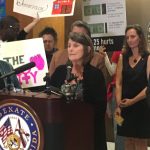 Karen Woodall, speaking at a Capitol press conference. Photo via Twitter
To the degree that COVID has opened people’s eyes to inequities in health care and other areas of society, these candidates backgrounds could prove an asset, she continued.
Woodall also is watching the race to succeed Democrat Loranne Ausley in House District 9, which includes Tallahassee. (Ausley is unopposed in the primary for the state Senate.) Allison Tant, an advocate of independent living for disabled people and former chair of the Florida Democratic Party, is running in the primary against Arnitta Jane Grice-Walker, an elementary school teacher making her second bid for the seat.
Jim Kallinger, a former House member who serves as president of the Florida Faith and Freedom Coalition, is unopposed for the GOP nomination.
And Woodall’s watching the Senate District 29 primary between Florida House member Tina Polsky and former House member Irv Slosberg. Sen. Kevin Rader, who declined to seek re-election, is backing Polsky. The district includes portions of Palm Beach and Broward counties. Brian Norton is unopposed for the Republican nomination.
The AFL-CIO is backing Polsky, Templin said, although he considers Slosberg a “fine, fine man.”
‘Critically important’ primary races for conservatives
Large, the tort reformer, has identified three races “that are really critically important to the direction of the Florida Senate.
They include Senate District 9, the Seminole and Volusia county seat vacated by term-limited Republican David Simmons.
“Seminole County has traditionally been a very red area of the state that now is being turned purple. That’s going to be a competitive race,” Large said.
Former House member Jason Brodeur is running unopposed for the GOP nomination. Five Democrats are on the primary ballot: employment lawyer Patricia Sigman, engineer Rick Ashby, attorney Alexis Carter, and two activists, Alexander Duncan and Guerdy Remy.
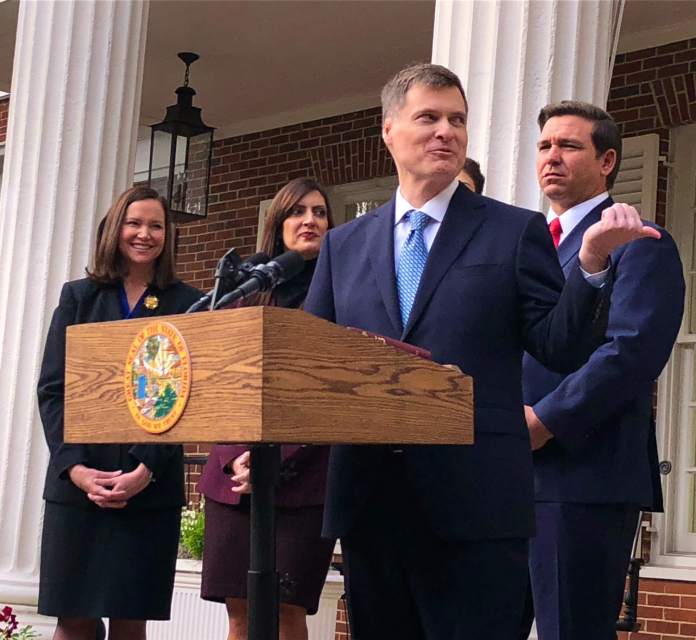
 William W. Large, president, Florida Justice Reform Institute. Credit. FJRI website.
“We believe it’s important that a pro-business individual like Jason Brodeur be elected to the Florida Senate,” Large said.
Large is looking, too, at Senate District 27, where GOP House members Ray Rodrigues and Heather Fitzenhagen are contesting that primary. Rodrigues has drawn an endorsement from Gaetz, as Florida Politics has reported.
Fitzenhagen, by the way is a trial lawyer — a bête noire for a group like Large’s.
“It’s going to be competitive. The trial lawyers are supporting Heather Fitzenhagen; the business community is supporting Ray Rodrigues,” Large said.
Additionally, the Senate District 39 race “will be important in the general,” Large said. That’s the race to replace Anitere Flores, a Republican who will term out of the seat, which covers Monroe and a portion of Miami-Dade counties. Tort reformers didn’t always find her a reliable vote.
The Democratic primary pits state House member Javier Fernández against Daniel Horton-Diaz, a former aide to U.S. Rep. Debbie Mucarsel-Powell.
Democratic pickups in these races “could change the direction of the entire state Senate,” Large said. “There are important House races, but I don’t know that the House is going to change if one or two people lose.”
Dark money
The AFL-CIO is closely watching dark money spending in some races — that’s financing channeled through political committees to obscure its origins.
One of them is Senate District 33 in Broward County, where Democrat Perry Thurston faces three Democrats in Tuesday’s primary. According to a News Service of Florida report, political committees linked to Republicans have been sending mailers describing Thurston as a closet Republican.
Another dark money campaign is happening in Senate District 9, the Seminole and Volusia county seat, Templin said. A group called Floridians for Equality and Justice issued mailers calling Patricia Sigman a “do-nothing mouthpiece” and praising Rick Ashby, the Tampa Bay Times has reported.
“In some of those instances we’ve increased our activities, whether it be direct mail to our members and their families, virtual phone banks, or other activities,” Templin said.
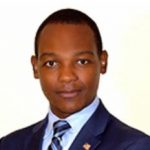 State Rep. Al Jacquet, Democrat representing part of Palm Beach County. Credit: Florida House of Representatives.
And he’s watching House District 88, in Palm Beach, where Democratic incumbent Al Jacquet has drawn four Democrats as his challengers: public housing official Omari Hardy, radio host Bob Louis Jeune, attorney Sienna Osta, and former Riviera Beach councilman Cedrick Thomas.
Jacquet, running for his third term, drew criticism from several Democratic House colleagues after directing anti-gay slurs against Hardy, who has said he is not gay but was raised by two mothers, according to this Florida Politics report
“We’re really pushing for Omari Hardy. We think that’s much better for representation of that district,” Templin said.
Ruth’s List
Zdravecky, of Ruth’s List, said the organization supports 64 candidates for state and local office but no congressional seats.
The organization is behind Jasmen Rogers-Shaw in the House District 95 race in Broward.
Michele Rayner, running in House District 70 in Tampa Bay, and Rogers-Shaw “would be the first black queer women that would be elected to the Florida House. That would be a very big victory for equality and racial justice,” Zdravecky said.
Ruth’s List also supports Patricia Sigman in Senate District 9 and Tina Polsky in Senate District 29. Zdravecky, too, decried the influx of dark money against Sigman, saying the other side “really sees her as a threat.”
“We can certainly mobilize our donors and do a lot of social media about what’s happening,” she said.
In the state House, the organization hopes to flip House District 105, the South Florida seat Ana Maria Rodriguez is leaving to run for the Senate. Ruth’s List’s candidate is attorney Maureen Porras, competing with leasing agent Javier Estevez for the Democratic nomination. Mental health counselor Pedro Barrios, Sweetwater City Commissioner David Borrero and attorney Bibiana Potestad are in the Republican primary.
Ruth’s List also includes candidates seeking election or reelection to the Senate without primary challengers — Zdravecky mentioned Ausley in Tallahassee, Linda Stewart in Orange County, and Lori Berman in Palm Beach County.

 Florida Supreme Court