
Florida Justice Reform Institute
  • Home
  • About
    • Mission
    • Meet the President
  • Legislative
    • On The Front Line
    • Achievements
    • 2026 Legislation
  • Appellate Work
  • FJRI in the News
  • Get Involved
    • Become a Member
    • The Committee for Florida Justice Reform
    • Contact
  • Click to open the search input field Click to open the search input field Search
  • Menu Menu
Florida Justice Reform Institute

William Large: Florida Must End Assignment of Benefits Abuse, Self-serving Windfalls

March 14, 2017/in Florida Politics


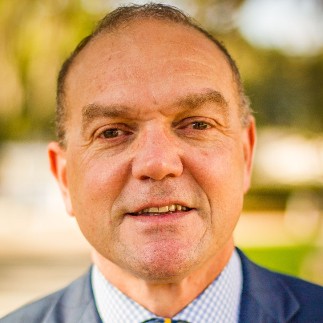
The dedicated president of our lobbying organization in Tallahassee, FL

William Large
Guest Author – March 14, 2017

A state law that was originally intended to give individual policyholders special rights in disputes with their insurance companies is instead being used by some repair vendors and their lawyers to generate a self-serving windfall. The problem is serious and growing, and it’s driving insurance costs higher and higher.

The so-called “one-way attorney fee” allows a policyholder to collect their legal fees from their insurer if they win a claims dispute. But, if the policyholder loses in court, they don’t have to pay the insurer’s legal fees.

Some repair vendors, though, are tricking policyholders into signing an assignment of benefits or AOB. This allows the vendor to seize control of the policyholder’s special rights, file a claim and sue the insurer, often without the policyholder’s knowledge or consent.

Now, this litigation-for-profit scheme has become an incentive for lawyers and their vendor clients — often water damage remediation firms, roofers, or auto glass shops with aggressive marketing schemes — to clog the courts with lawsuits and generate big paydays for themselves.

Recently, the Florida Justice Reform Institute revealed how the growing use of AOBs and the one-way attorney fee by third parties is increasing litigation and costs.

Using the Florida Department of Financial Services’ service of process database, we discovered some startling insights.

From 2000 to 2016, Florida’s population increased 26 percent, while total litigation filed against insurance companies increased about 280 percent.

In particular, AOB litigation increased by over 66 percent from 2010 to 2011, fell briefly after the 2012 auto insurance reforms, and then started rising again. From 2014 to 2015, AOB litigation increased 10.7 percent, and then 21 percent from 2015 to 2016.

AOB lawsuits initiated by vendors who provide water cleanup, restoration, drying, mitigation, mold detection, or remediation services were overwhelmingly concentrated in Palm Beach, Broward and Miami-Dade counties. On average, these three counties produced more than 80 percent of litigation from these vendors in 2014, and that share rose to nearly 85 percent in 2015, and nearly 89 percent in 2016.

Unfortunately, the problem is not just confined to home insurance claims. Auto glass claims also saw a staggering increase — over 3,000 percent in five years — from 591 claims in 2011 to 19,558 claims in 2016.

But the most surprising discovery was that nearly 25 percent of all AOB cases — from property to auto to auto glass — filed in Florida between 2013 and 2016 were filed by just 11 lawyers.

The bottom line is that all this rampant AOB abuse and litigation is driving insurance costs up. Insurance Commissioner David Altmaier had it right last month when he told the Governor and Cabinet that there’s no other explanation other than the one-way attorney fees.

The Florida Legislature has strong data supporting this growing problem. It’s time for them to pass meaningful reforms and stop a handful of unscrupulous repair vendors and their lawyers from using the policyholders’ special rights for their own benefit. Keep consumers in control of the insurance policies they bought and paid for, and stop the abuse that’s sending insurance rates higher.

William Large is President of the Florida Justice Reform Institute.

http://floridapolitics.com/archives/233919-william-large-florida-must-end-assignment-benefits-abuse-self-serving-windfalls

https://www.fljustice.org/wp-content/uploads/2024/11/fjri-news.jpg 800 800 RAD Tech https://www.fljustice.org/wp-content/uploads/2024/11/Florida-Justice-Reform-Institute.jpg RAD Tech2017-03-14 15:59:462024-11-26 01:17:50William Large: Florida Must End Assignment of Benefits Abuse, Self-serving Windfalls
Florida Justice Reform Institute

House Panel Would Allow Interest Payments on Noneconomic Verdicts

February 23, 2017/in Florida Politics


House panel would allow interest payments on noneconomic verdicts

MICHAEL MOLINE
February 23, 2017, 4:30 pm

Insurance interests are up in arms about a House committee’s approval of a bill that would allow plaintiffs to recover prejudgment interest on noneconomic claims, including pain and suffering.

HB 469 says that plaintiffs who prevail in lawsuits could collect interest — at a rate now set a 4.9 percent, but varying with inflation — from the date of a loss.

They could collect against attorney fees and costs, too.

Exiting law provides for prejudgment interest on economic claims only, or when provided for by contract.

The Civil Justice & Claims Subcommittee approved the measure Thursday on an 11-4 vote. Details here (scroll down).

A companion measure, SB 334, by Sarasota Republican Greg Steube, has cleared the Senate Judiciary Committee.

Sponsor Shawn Harrison, an attorney from Tampa, said plaintiffs could not collect interest on punitive damages.

The bill would clarify a “gray area” in the law, he said.

“A person who is damaged by a tortfeasor is just as damaged regardless of whether they have an action in contract or in tort,” Harrison said. “Why should there be a difference?”

Katie Webb, representing the Property Casualty Insurers Association of America, warned the measure would increase pressure on carriers to settle unworthy claims.

“It could create an incentive for insurance companies to settle cases early, prior to thoroughly investigating and defending, when appropriate, certain claims that are questionable,” Webb said.

Representatives of the Florida Chamber of Commerce, Associated Industries of Florida, the American Insurance Association, and the Florida Justice Reform Institute were among those who opposed the bill, warning of the potential to increase the cost of doing business.

James Gustafson, representing the Florida Justice Association, argued existing law makes an unfair distinction between economic and noneconomic damages — say, loss of vision. Such an injury “every bit as significant and important and real” as an out-of-pocket loss, he said.

Committee members Erin Grall noted that before prejudgment interest becomes an issue, there has to be a judgment or verdict.

“For anybody to take for granted how easy it is to prove causation, you have not presented in front of a trial court in Vero Beach, Fla.,” she said.

George Moraitis Jr. thought it unreasonable to expect defendant companies to calculate pain and suffering awards.

“It’s a speculative number, and no one really at the beginning can say what do they think a potential jury of unknown people at the time a case starts, how much is that going to be worth,” Moraitis said.

“No one is going to settle a case that they truly believe they are in the right on because of an extra 5 percent that might be awarded,” Harrison said. “We are talking about sophisticated corporate defendants here. They know how to play this game.”

Following the vote, Personal Insurance Federation of Florida President Michael Carlson issued a written statement reiterating that the bill would inflate insurance and business costs.

“PIFF member companies believe that people who suffer damages through the wrongful action of others should be fairly compensated for their losses. Florida law currently provides access to redress and means for full compensation and should not be changed to suit special interests,” he said.

http://floridapolitics.com/archives/232714-house-interest

https://www.fljustice.org/wp-content/uploads/2024/11/fjri-news.jpg 800 800 RAD Tech https://www.fljustice.org/wp-content/uploads/2024/11/Florida-Justice-Reform-Institute.jpg RAD Tech2017-02-23 15:55:562024-11-26 01:35:02House Panel Would Allow Interest Payments on Noneconomic Verdicts
Florida Justice Reform Institute

Supreme Court Rejects Evidence Standard Supported by Rick Scott, Lawmakers

February 16, 2017/in Florida Politics


Supreme Court rejects evidence standard supported by Rick Scott, lawmakers

JIM ROSICA
February 16, 2017, 12:36 pm

In yet another rejection of a policy backed by conservative lawmakers and Gov. Rick Scott, the Florida Supreme Court Thursday “declined” to change the state’s expert evidence rule to one used by federal courts and most states.

“We decline to adopt the Daubert Amendment to the extent that it is procedural, due to the constitutional concerns raised, which must be left for a proper case or controversy,” said the majority opinion by Chief Justice Jorge Labarga and Justices R. Fred Lewis, Barbara Pariente and Peggy A. Quince.

Those concerns include “undermining the right to a jury trial and denying access to courts.”

Florida uses the Frye standard, generally considered easier for plaintiffs to get damaging expert testimony before a jury, while it’s much harder to do so under Daubert.

That’s why Frye is preferred by plaintiffs’ attorneys, and Daubert became a favorite of the defense bar and its big business clients. The Florida Bar’s Board of Governors last year voted to recommend to the court against the change.

Justices Charles Canady and Ricky Polston, the court’s conservative minority, disagreed with their colleagues. The newest justice, conservative C. Alan Lawson, did not participate in the decision.

Polston, in a dissent in which Canady joined, questioned the majority’s concerns.

“Has the entire federal court system for the last 23 years as well as 36 states denied parties’ rights to a jury trial and access to courts? Do only Florida and a few other states have a constitutionally sound standard for the admissibility of expert testimony? Of course not,” he wrote.

In 2013, the Legislature approved and Scott signed into law the changing of Florida’s expert evidence rule to the Daubert standard, but the courts did not immediately follow suit.

The judicial branch avoided having to follow the change because of a question over whether switching the expert testimony rule is substantive or procedural. Generally under the state constitution, the Legislature has authority over the “substance” of court operations and the courts decide matters purely of “procedure.”

State Rep. Larry Metz, who sponsored the law that included the Frye-to-Daubert swap, had argued before the court last year that the change “gets to the fundamental purpose of courts,” having “a greater standard of reliability so we can get to the truth in cases.”

On Thursday, he said the court ignored the fact that his legislation passed in both chambers with comfortable majorities: “And we are representing the people of Florida in doing that.”

But William Large, president of the Florida Justice Reform Institute, a group created by the Florida Chamber of Commerce, said in a statement “there are no federal cases holding (that) Daubert violates a right to a jury trial and access to courts. The court was wrong to insinuate otherwise.”

The court noted it had received 56 comments in favor of keeping Frye and 131 comments in favor of switching to Daubert.

Of those, 77 were “form emails from ‘small business owners’ repeating the same request that the court (move to) ‘the Daubert expert witness standard that the Florida legislature passed in 2013,’ ” a footnote in the majority opinion said.

The Frye standard asks whether expert testimony is “generally accepted” in a particular scientific community. Daubert is stricter scientifically and can often require a kind of “mini-trial” even before an expert can appear in front of jurors. Both are named after court cases.

Oral argument in the case last year added the wrinkle of criminal cases, where advocates said Daubert might help defendants’ lawyers hold police crime labs more accountable, in cases involving drug-sniffing dogs and testing for arson, for example.

The full court Thursday also turned down two other proposed evidence changes.

One would require “a standard-of-care expert witness in a medical malpractice action to specialize in the same specialty as the health care provider against whom or on whose behalf the testimony is offered.”

The other would change “the hearsay exception relating to reports of abuse by elderly persons or disabled adults.”

 http://floridapolitics.com/archives/232254-supreme-court-rejects-daubert

https://www.fljustice.org/wp-content/uploads/2024/11/fjri-news.jpg 800 800 RAD Tech https://www.fljustice.org/wp-content/uploads/2024/11/Florida-Justice-Reform-Institute.jpg RAD Tech2017-02-16 15:59:302024-11-26 01:58:52Supreme Court Rejects Evidence Standard Supported by Rick Scott, Lawmakers
Florida Justice Reform Institute

True Cost of Workers’ Compensation Rulings Pegged at $1.3 Billion

February 2, 2017/in Florida Politics


True cost of workers’ compensation rulings pegged at $1.3 billion

MICHAEL MOLINE
February 2, 2017, 6:17 pm

Florida Supreme Court rulings in workers’ compensation cases will boost employers’ costs by 35.4 percent, adding $1.3 billion to the cost of doing business in the state, an economist warned Thursday during the Florida Chamber of Commerce’s Insurance Summit.

“This breaks into a $929 million annual increase in premiums for the insured employers and a $361 million increase in claims costs for the self-insured employers,” said Mike Helvacian, of the National Center for Policy Analysis.

That means smaller payrolls and annual raises, less hiring, and smaller starting wages, he said.

Helvacian blamed escalating attorney fees now that the court has lifted caps on attorney fees. The court did so in Castellanos v. Next Door Co., a ruling handed down last year. The high court lifted limits on total disability eligibility in a separate ruling.

The attorney fee caps were imposed in reforms the Legislature adopted in 2003, as were other restrictions on benefits intended to drive down the cost of administering claims. Before the reforms, Florida posted the highest workers’ compensation premiums in the country. Afterward, the cost savings contributed to to private employment growth at a rate nearly twice that in Alabama, Georgia, Mississippi and Alabama, Helvacian said.

Wage growth also exceeded that in Florida’s neighbors — at 3.4 percent compared to an average 2.7 percent.

The attorney fee caps, based on the amount of benefits earned for the client, and other reforms saved 28.6 percent in system costs, by Helvacian’s calculations. Without them, he expects costs to rise by that same percentage.

Helvacian appeared during a panel discussion during the Chamber gathering in Miami. Also participating was Chris Bailey, state relations executive with the National Council on Compensation Insurance, or NCCI, which proposes workers’ compensation premium rates in Florida.

Last year, NCCI proposed a 19.6 percent premium hike, although the Office of Insurance Regulation approved only an 14.5 percent increase. The rate, which began to take effect in December, is under attack in the 1st District Court of Appeal over alleged violation of the Sunshine Law.

Critics of Florida’s workers’ compensation system have questioned NCCI’s role in proposing rates for nearly all Florida insurers. These critics, including trial attorneys on key House and Senate Committees, argue insurers should compete against each other on rates — basing premiums on individual policy loss costs.

That’s a “red herring,” Bailey said — “truly, more of a distraction” from the real problem, And that, he said, is attorney fees.

Under Florida’s system, insurers compete on the “back end,” Bailey said — offer dividends and other inducements to lure business.

Lisa Miller, a Tallahassee lobbyist, counts herself among the system’s critics.

“Workers’ compensation is designed to protect injured workers. The best way to do that is competition on the front end and the back end,” Miller said.

“The best way to do that is re-engineer how we handle rates in Florida, and study the claims practices and go to loss cost.”

http://floridapolitics.com/archives/231488-chamber-workers

https://www.fljustice.org/wp-content/uploads/2024/11/fjri-news.jpg 800 800 RAD Tech https://www.fljustice.org/wp-content/uploads/2024/11/Florida-Justice-Reform-Institute.jpg RAD Tech2017-02-02 15:59:422024-11-26 02:09:34True Cost of Workers’ Compensation Rulings Pegged at $1.3 Billion
Florida Justice Reform Institute

Rick Scott Picks C. Alan Lawson for Supreme Court

December 16, 2016/in Florida Politics


Jim Rosica – December 16, 2016

Conservative appellate judge C. Alan Lawson will become the next Florida Supreme Court justice, Gov. Rick Scott announced Friday morning.

Lawson, who will replace retiring Justice James E.C. Perry, is chief judge of the state’s 5th District Court of Appeal in Daytona Beach. Perry’s retirement is effective Dec. 30; Lawson’s first day is the 31st.

“He’s got a 20-year track record, he’s been a public servant, he clearly believes in following the rule of law,” Scott said, standing next to Lawson – his first ever Supreme Court pick – and his family. “He is going to do a good job … and he’s not going to legislate from the bench.”

Lawson now makes a third conservative vote on a seven-member state Supreme Court that often splits 5-2 on matters of public policy. To date, Justices Charles Canady and Ricky Polston have been the court’s most reliable conservative voices.

In a statement, both men “applaud(ed)” the appointment, calling Lawson “a true leader (who) brings strong conservative principles” to the court.

Conservative lawmakers and business interests have long derided the court – specifically its liberal-leaning triumvirate of Justices Barbara Pariente, Peggy A. Quince and R. Fred Lewis – for “judicial overreach,” saying the court often breached the separation of powers between the lawmaking and judicial branches.

Recently, they denounced decisions chipping away at protections afforded business owners in the state’s workers’ compensation law, striking down caps on attorney fees and ordering disability benefits extended for injured workers.

The state’s highest court also becomes more white; Perry is black. With his departure, Quince is the now the lone African American on the court.

This isn’t Lawson’s first attempt to join the court. Perry, whom Lawson is replacing, beat him in 2009 for the opening created by the retirement of Justice Charles T. Wells.

Lawson appeared with his wife Julie and son Caleb, as well as his father and mother, Charles and Velma Lawson, sister Laurie Lawson Cox and brother-in-law Thomas Cox.

Lawson, whom Scott had first mistakenly introduced as “Lanson,” told reporters that the judiciary’s mandate to interpret laws “came with a promise, that it would be exercised with judicial restraint.”

“There are a lot of precedents from the Florida Supreme Court and U.S. Supreme Court that details what judicial restraint means and is not supposed to mean,” he added. Many critics have noted that “judges and courts have moved away from what is clearly laid out … that says, ‘this is what courts are supposed to do.’ “

When asked if he could name decisions in which judges have “overreached,” he said, “No. It’s not ethical for judges to comment on issues that could come before the Supreme Court.”

Lawson was then backed by “religious conservatives and the National Rifle Association,” wrote politics reporter William March in a February 2009 story for the now-defunct Tampa Tribune, while Perry was favored by “liberal groups and black leaders.” Those backers were largely silent this time around.

The appointment created a quandary for then-GOP Gov. Charlie Crist, March wrote, “pit(ting) conservatives in his own party (then Republican) against a minority community Crist is courting.” He eventually picked Perry, who joined the court the next month.

Lawson, born in Lakeland, grew up in Tallahassee. He graduated from Tallahassee Community College and later Clemson University with a degree in Parks, Recreation & Tourism Management, according to his online bio. He got his law degree from Florida State University in 1987.

He was in private practice for several years before becoming an assistant county attorney in Orange County and then a circuit judge in 2002.

Lawson also was a Florida Bar exam question writer and grader. He moved to the 5th District appellate bench in 2006. Both his judicial appointments were by Republican former Gov. JebBush.

In 2012, he was a member of a three-judge appeals panel that considered a custody battle between two women who were formerly in a relationship.

The majority said both women have parental rights, but Lawson wrote “a blistering dissent,” in which he said a child can have only one mother, according to the Associated Press.

The court shouldn’t recognize two mothers “unless we are also willing to invalidate laws prohibiting same-sex marriage, bigamy, polygamy, or adult incestuous relationships on the same basis,” Lawson said. In a 4-3 opinion, the state Supreme Court later said the non-birth mother could seek shared custody.

Scott picked Lawson over two other conservative finalists for the post: Wendy W. Berger, another judge on the 5th District Court of Appeal, and Dan Gerber, an Orlando civil-trial defense attorney.

Scott “had three excellent candidates to consider,” Florida Bar President William J. Schifino Jr. said in a statement.

“I applaud the governor, the Judicial Nominating Commission and the process, and very much look forward to working with soon-to-be Justice Lawson in the future,” Schifino said. “He has demonstrated himself to be an excellent jurist and someone who has the best interests of all Floridians at heart.”

Business interests also commended the pick.

William Large, president of the Florida Justice Reform Institute, a group created by the Florida Chamber of Commerce, said Lawson’s appointment is a “reaffirmation of our system of checks and balances between the three branches of government.”

Scott “based his decision on the precepts that judges should strictly adhere to the rule of law,” he said in an email. The governor’s “thoughtful choice in this solemn duty will have a profoundly positive impact on Florida for a long time.”

Tom Feeney, CEO of Associated Industries of Florida, added that his members have been “anxious for the day that a majority of the Florida Supreme Court can restore respect for the constitutional separation of powers, including legitimate powers of the popularly elected members of the legislative and executive branches.”

“If the Florida Supreme Court will exercise only those legitimate judicial powers, such as deciding controversies of fact and enforcing the language of our duly enacted statutes and Constitution, as opposed to arbitrarily injecting their personal and political preferences, a constitutional balance can be restored.”

Scott could have the opportunity himself to put a conservative majority on the bench. Pariente, Quince and Lewis face mandatory retirement in early 2019, and Scott said he plans to replace them before he leaves office that January.

“I will appoint three more justices the morning I finish my term,” he said.

http://floridapolitics.com/archives/229060-rick-scott-supreme-court

https://www.fljustice.org/wp-content/uploads/2024/11/fjri-news.jpg 800 800 RAD Tech https://www.fljustice.org/wp-content/uploads/2024/11/Florida-Justice-Reform-Institute.jpg RAD Tech2016-12-16 15:59:112024-11-26 02:18:09Rick Scott Picks C. Alan Lawson for Supreme Court
Florida Justice Reform Institute

Hermine Enlisted in Business Campaign Against Insurance Rackets

September 8, 2016/in Florida Politics


Hermine enlisted in business campaign against insurance rackets

MICHAEL MOLINE
September 8, 2016, 1:01 pm

A business coalition warned Florida homeowners Thursday against signing away their insurance claims for Hurricane Hermine damage to dodgy contractors or attorneys.

The warning came amid a gathering campaign against such assignment-of-benefits agreements — sometimes known as AOBs. The effort promises to figure prominently when the Legislature meets next year.

“Sadly, storms bring out scam artists seeking to cheat the system and take advantage of people during a crisis,” said Mark Wilson, president and chief executive officer of the Florida Chamber of Commerce, which leads the Consumer Protection Coalition.

“We urge homeowners to be mindful of home repair vendors offering deals too good to be true and to look closely before signing any document that gives someone else control of their insurance policy,” Wilson said.

The coalition includes insurance, banking, and commercial organizations — plus the Florida Justice Reform Institute, which seeks to limit “wasteful” civil litigation.

Business leaders blame AOBs for a proposed increase of nearly 7 percent next year on premiums for property insurance sold through the Citizens Property Insurance Corp. — the state-run insurer of last resort in Florida.

Contractors and attorneys persuade homeowners to sign away their claims via AOBs in exchange for quick repairs. Citizens has complained that bad actors, especially in South Florida, have been inflating repair costs and forcing expensive litigation.

Better, the coalition said, to contact your insurer directly. It recommended hiring only reputable contractors and demanding to see their credentials.

“After a storm, people should be focused on getting their lives back to normal, not worrying about whether they are going to be the victim of an insurance scam,’’ said Michael Carlson, president of the Personal Insurance Federation of Florida, a member of the coalition.

“Times like these underscore the need for assignment of benefits reform to ensure consumers are protected.”

Speaking of scams, Florida Attorney General Pam Bondi has fielded 35 reports of price gouging through a hotline she has activated to field complaints. Twenty-four were against businesses in Leon County.

“My investigators have been following up on the complaints, contacting the consumers and businesses, and making site visits to the businesses, where appropriate, to ensure that if there is a potential pricing issue, the business is advised immediately so that it can change its practices and make refunds,” Bondi said in a written statement.

“Our review of the complaints, collection of further pricing documentation, and follow-up actions are ongoing,” she said.

Chief Financial Offer Jeff Atwater, meanwhile, has received reports of people in Taylor County claiming to represent the Federal Emergency Management Agency and demanding a $150 deposit to help file hurricane-related insurance claims.

FEMA never demands a fee for such services, Atwater said.

The number for Atwater’s consumer helpline is 877-693–5236.

Citizens had received 573 Hermine-related claims at last count, mostly from the Tampa area, spokesman Michael Peltier said. The insurer has already contacted about 80 percent of those policyholders.

“Nothing unusual to report,” Peltier said.

The state Office of Insurance regulation has notified insurers to report their post-Hermine claims.

“The office will be collecting claims data from insurance companies related to Hurricane Hermine and issue a report when the submissions are sufficient,” spokeswoman Karen Kees said.

Insured losses from Hermine could hit $500 million in Florida and other Southeastern states, according to Karen Clark & Co., as cited in an update posted by Fitch Ratings Inc. Fitch said the insurance industry could manage the losses.

https://www.fljustice.org/wp-content/uploads/2024/11/fjri-news.jpg 800 800 RAD Tech https://www.fljustice.org/wp-content/uploads/2024/11/Florida-Justice-Reform-Institute.jpg RAD Tech2016-09-08 15:57:492024-12-11 18:04:48Hermine Enlisted in Business Campaign Against Insurance Rackets
Florida Justice Reform Institute

Courts, Lawyers, Businesses Ally In Fight For More Courts Money

January 16, 2009/in Florida Politics


News Service of FL

COURTS, LAWYERS, BUSINESSES ALLY IN FIGHT FOR MORE COURTS MONEY

By KATHLEEN HAUGHNEY
THE NEWS SERVICE OF FLORIDA

MIAMI, Jan. 16, 2009……..Florida’s top legal professionals are embarking on a lobbying effort to stop lawmakers from cutting money fromthe state’s court system.

Slicing the court budget, lawyers and judges said Friday, will affect all Florida residents by decreasing the efficiency of the courts.

Over a two-year period, the Florida courts budget has been cut by about 10 percent and had 280 jobs eliminated. If Gov. Charlie Crist approves a budget reduction passed by lawmakers this week, the state court system’s budget will stand at just more than $433.2 million. Last year, the court operated under a $491.2 million budget.

The Florida Bar for the past few months has been soliciting comments from around the state on how budget cuts have impacted the efficacy of the court system.

The answers: Thousands of foreclosure cases are clogging the courts; business lawsuits are taking months to resolve; and rising court costs have stopped families in the middle of divorce from taking action.

Public defenders have also complained that they can no longer handle their caseloads. The Miami-Dade public defender even filed a lawsuit to free the public defender’s office from taking all cases.

“This is the third branch of government. It’s embarrassing that we don’t fund them at the same level we fund ourselves,” said Rep. J.C. Planas, R-Miami, who is also a practicing attorney.

Chief Justice Peggy Quince, along with other members of the court system and the Bar have allied to push for additional money for the courts.

Business leaders have joined the lobbying effort as well, tying the court system and economy directly together. A study by the Washington Economics Group concluded that $17.4 billion in Florida’s economic output is lost due to civil case delays each year.

William Large, president of the Florida Justice Reform Institute, an organization that advocates for the tightening of lawsuit rules, said the court’s lack of funding sometimes slows down its ability to issue judgments quickly. For businesses often engaged in litigation, that’s bad news.

“Because of the cuts to the judiciary here in Florida, we’re seeing Fortune 500 companies moving to Alabama and other states instead of Florida,” Large said.

Trust funds, like a couple new ones established by the Legislature this past week, are a good first step, many said. But there is no guarantee that lawmakers will not raid the fund in the future, leaving the courts without a source of income.

Lawyers and members of the judiciary who were in Miami Friday for a Florida Bar summit on state court funding said the cuts in this latest special session were not nearly as bad as they thought they would be. 

But it still wasn’t entirely good news.

“I guess we can be thankful it wasn’t worse,” said Bar President Jay White.

–END– 1/16/2009

https://new.newsserviceflorida.com/app/post.html?postID=1025 

https://www.fljustice.org/wp-content/uploads/2024/11/fjri-news.jpg 800 800 RAD Tech https://www.fljustice.org/wp-content/uploads/2024/11/Florida-Justice-Reform-Institute.jpg RAD Tech2009-01-16 15:49:502025-07-08 21:34:35Courts, Lawyers, Businesses Ally In Fight For More Courts Money
Page 11 of 11«‹91011

FJRI News Categories

FJRI News Archive

Search Search
Florida Justice Reform Institute

Florida Justice Reform Institute

  • Phone

    (850) 222-0170

  • Hours of Operation

    Monday – Friday, 9 a.m.-5 p.m.

  • Location Location
    Address

    215 South Monroe Street
    Suite 140
    Tallahassee, FL 32301

Site Links

  • The Committee for Florida Justice Reform
  • About
  • Legislative
  • Appellate Work
  • FJRI in the News
  • Get Involved
© 2026 Florida Justice Reform Institute, All Rights Reserved. | Website Hosting & Web Development by RAD TECH
  • Link to Facebook
  • Link to X
  • Link to LinkedIn
Scroll to top Scroll to top Scroll to top